UBC · 临床文档的提取与分析 / UBC10
UBC Extraction and Analysis of Clinical Documents:课程介绍
我开始学 UBC 的第二门课了:UBC Extended Learning 的 Extraction and Analysis of Clinical Documents(临床文档的提取与分析)。第一门课打下了 NLP 和大语言模型的基础,这一门把它们用到临床记录、报告和评估上。这一篇介绍这门课在项目里的位置、怎么上、谁来讲、四个模块学什么,以及我学完模块一后的第一印象。
UBC's Extraction and Analysis of Clinical Documents: Course Intro
I have started my second UBC course: Extraction and Analysis of Clinical Documents, from UBC Extended Learning. The first course built the foundations of NLP and large language models; this one puts them to work on clinical notes, reports and assessments. This page covers where the course fits, how it runs, who presents it, what its four modules cover, and my first impression after module one.
- 章节 / section
- 关键概念 / key term
- 阅读提示 / reading note
这门课和它在项目里的位置
这门课是 UBC 微证书项目“用自然语言处理改善患者照护”(Natural Language Processing to Improve Patient Care)三门五周课程中的第二门。临床记录、报告和评估里有大量关于患者的细节,但它们是非结构化文本,很难大规模分析。这门课教用 NLP 方法对这些文档做分类、信息提取和摘要,也讲大语言模型怎样帮助回答临床问题、辅助书写病历。
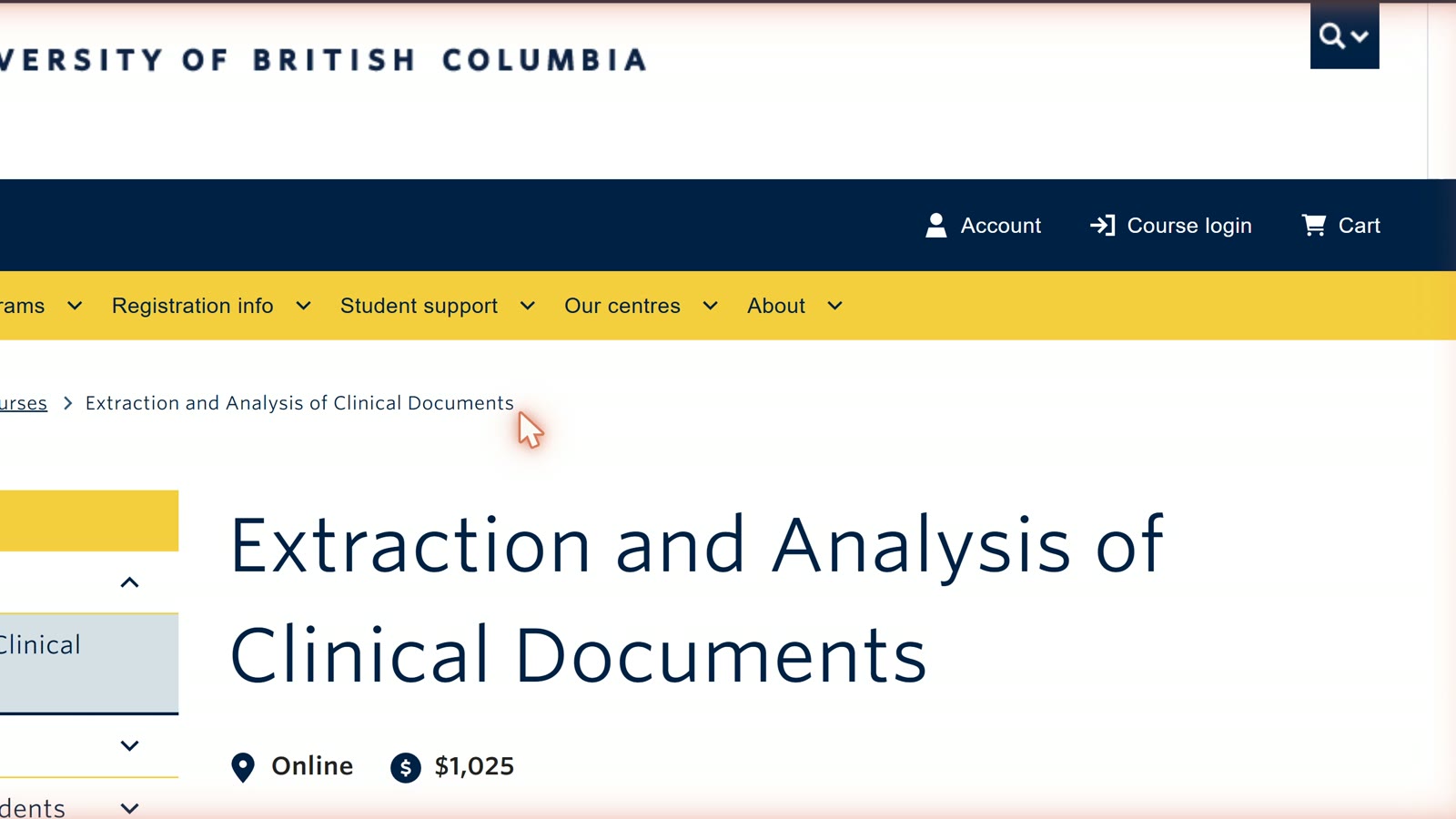
三门课可以单独学,顺序也不限,但 UBC 建议按顺序学;刚接触 NLP 的话,先从 Overview of NLP and Large Language Models 开始。
| 形式 | 完全线上,每周有可选的答疑时间 |
| 时长 | 五周;三门课的整个项目约 75 小时 |
| 费用 | 每门 1,025 加元,整个项目 3,075 加元 |
| 通过要求 | 成绩至少 70%;课程获 UBC CPD 认可 24 学分 |
The course and where it fits
The course is the second of three five-week courses in UBC's micro-certificate Natural Language Processing to Improve Patient Care. Clinical notes, reports and assessments hold a lot of detail about patients, but because the text is unstructured it is hard to analyze at scale. The course teaches NLP methods to classify, extract and summarize information from these documents, and how large language models can support clinical questions and documentation.
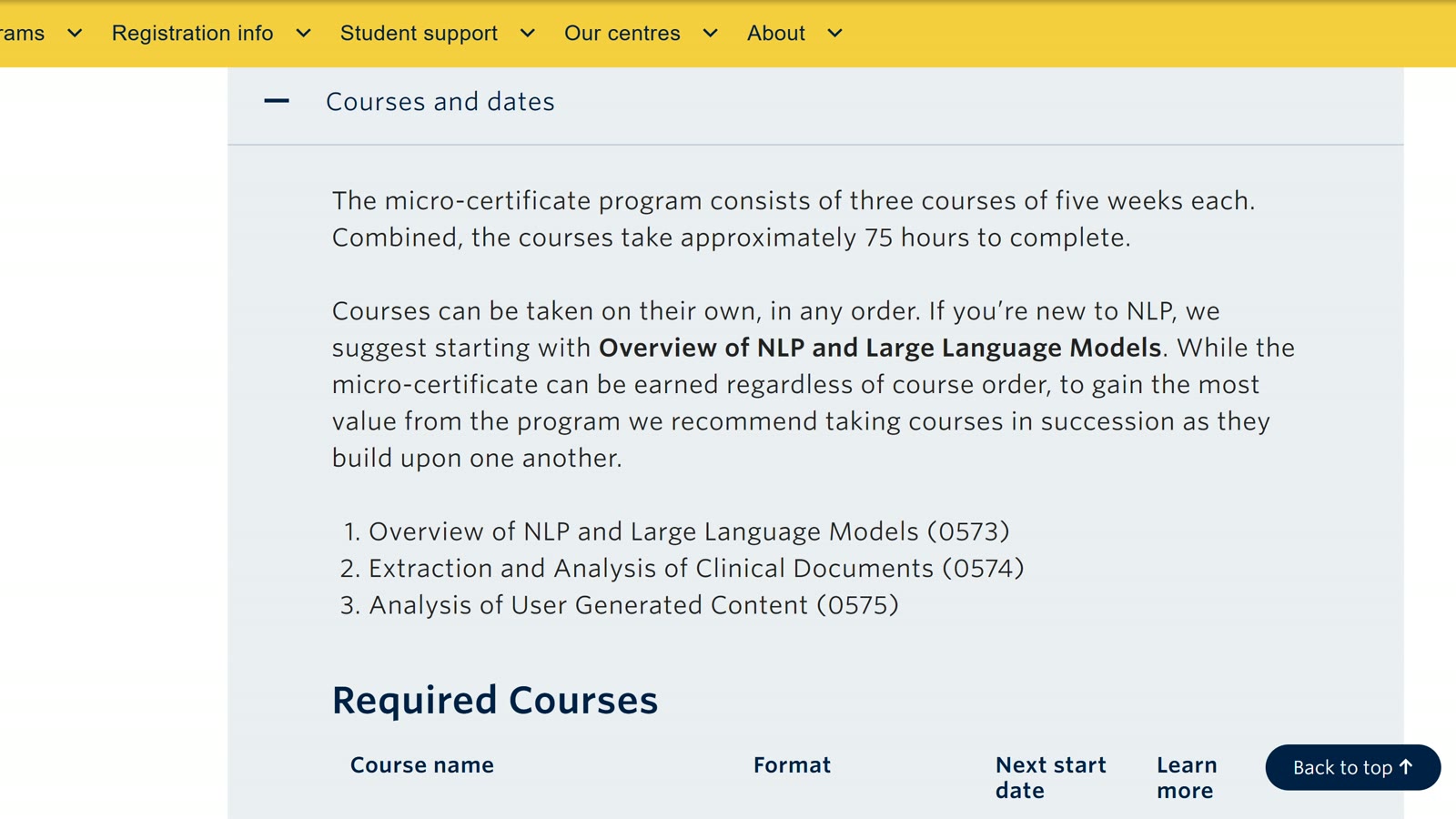
The three courses can be taken on their own and in any order, but UBC recommends taking them in sequence, and starting with Overview of NLP and Large Language Models if you are new to NLP.
| Format | 100% online, with optional weekly office hours |
| Length | Five weeks; the three-course program takes about 75 hours in total |
| Cost | $1,025 per course, $3,075 for the program |
| To pass | A minimum grade of 70%; the course is approved by UBC CPD for 24 credits |
课程怎么上
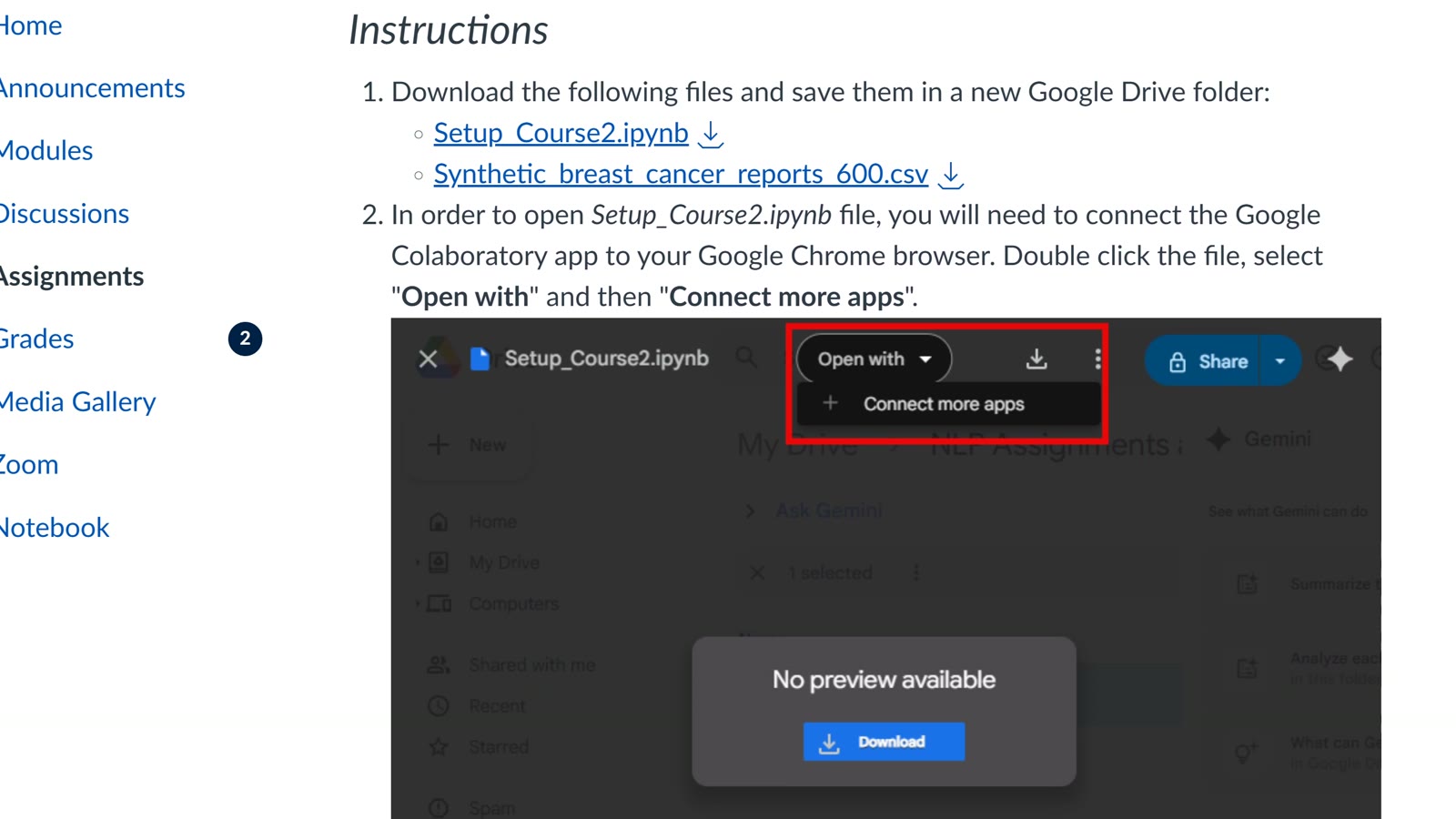
和第一门课一样,它完全在线。在每周截止日期之前按自己的节奏学习,每周大约五到七个小时。每个模块有简短的视频课、自测小测验(每个可以做两次)、动手实验和一次计分讨论。实验是在 Google Colab 里运行的 Python 笔记本,只需要一个 Google 账号和浏览器。
每周还有一次可选的一小时 Zoom 直播,由课程助教主持,可以提问,也有引导式的小组讨论。
How it runs
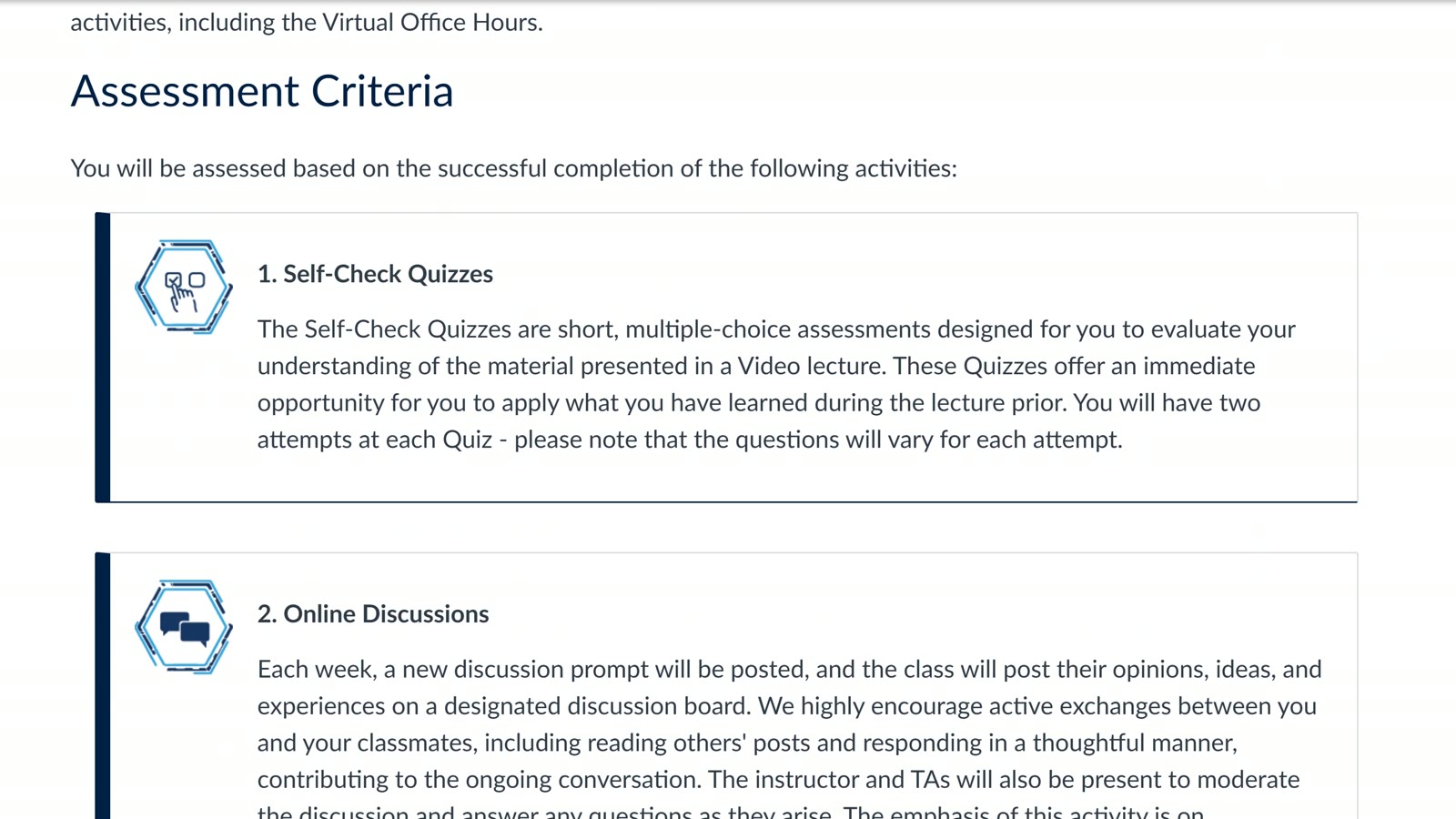
Like the first course, it is fully online. You work at your own pace within weekly deadlines, about five to seven hours a week. Each module has short video lessons, self-check quizzes (two attempts each), hands-on labs and a graded discussion. The labs are Python notebooks that run in Google Colab, so all you need is a Google account and a browser.
Once a week there is an optional one-hour live session on Zoom with the course facilitator, for questions and a guided group discussion.
谁来讲课
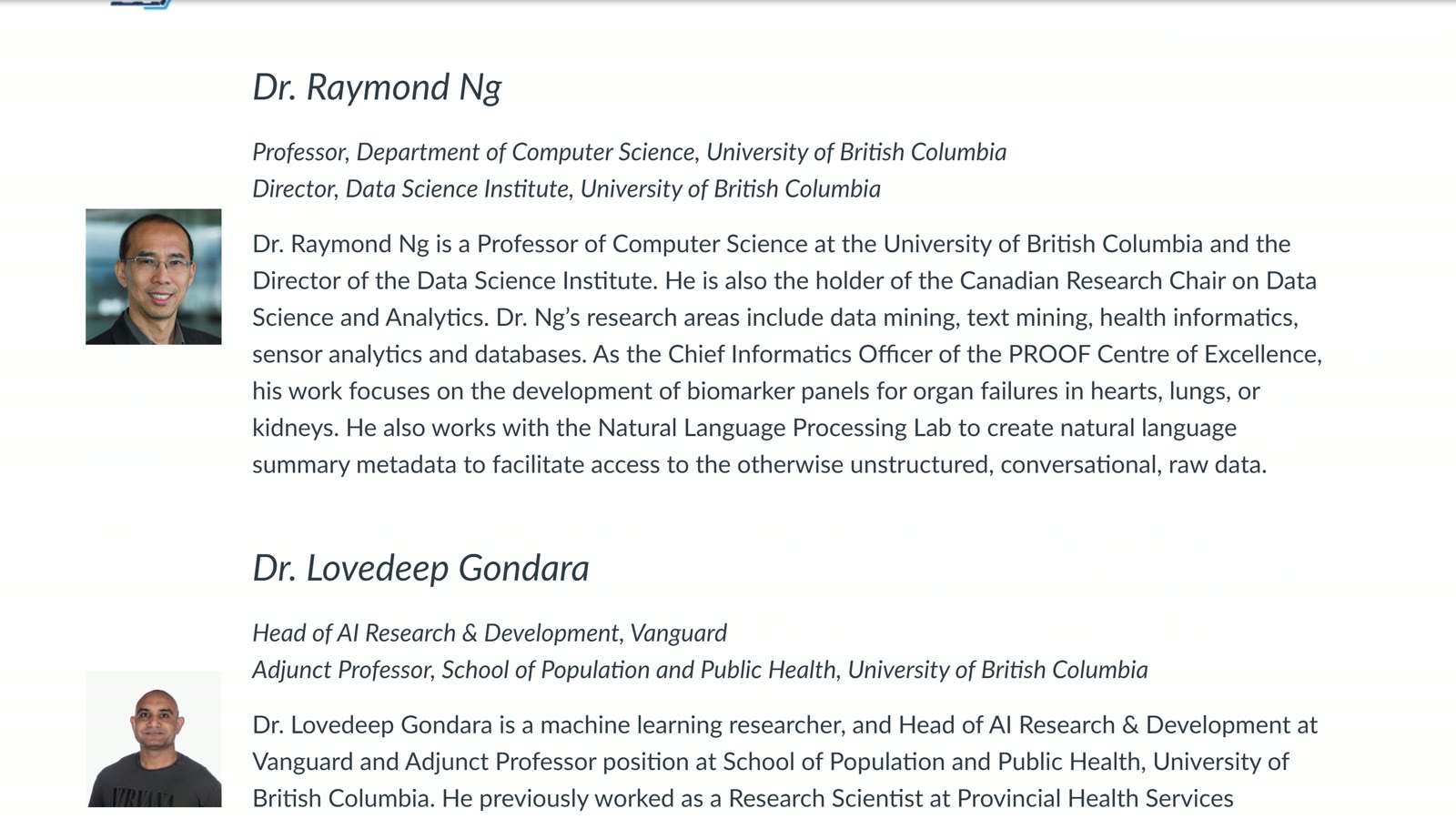
大部分课程由 Raymond Ng 讲授,他是计算机科学教授、UBC 数据科学研究所所长,研究方向包括数据挖掘、文本挖掘和健康信息学。模块一里,和他一起讲课的还有研究医疗中语言模型及其应用的 Lovedeep Gondara,以及温哥华沿海卫生局(Vancouver Coastal Health)的数据科学家 Saffrin Granby。所以这些案例来自在 BC 省医疗体系里真正做过这些工具的人。
Who presents the lessons
Most lessons are presented by Raymond Ng, a professor of computer science and the director of UBC's Data Science Institute, whose research covers data mining, text mining and health informatics. In module one he is joined by Lovedeep Gondara, who researches language models and their applications in health care, and Saffrin Granby, a data scientist at Vancouver Coastal Health. So the examples come from people who have built these tools inside B.C.'s health system.
四个模块
课程从真实项目开始,再逐个讲主要任务:
| 模块 | 内容 |
|---|---|
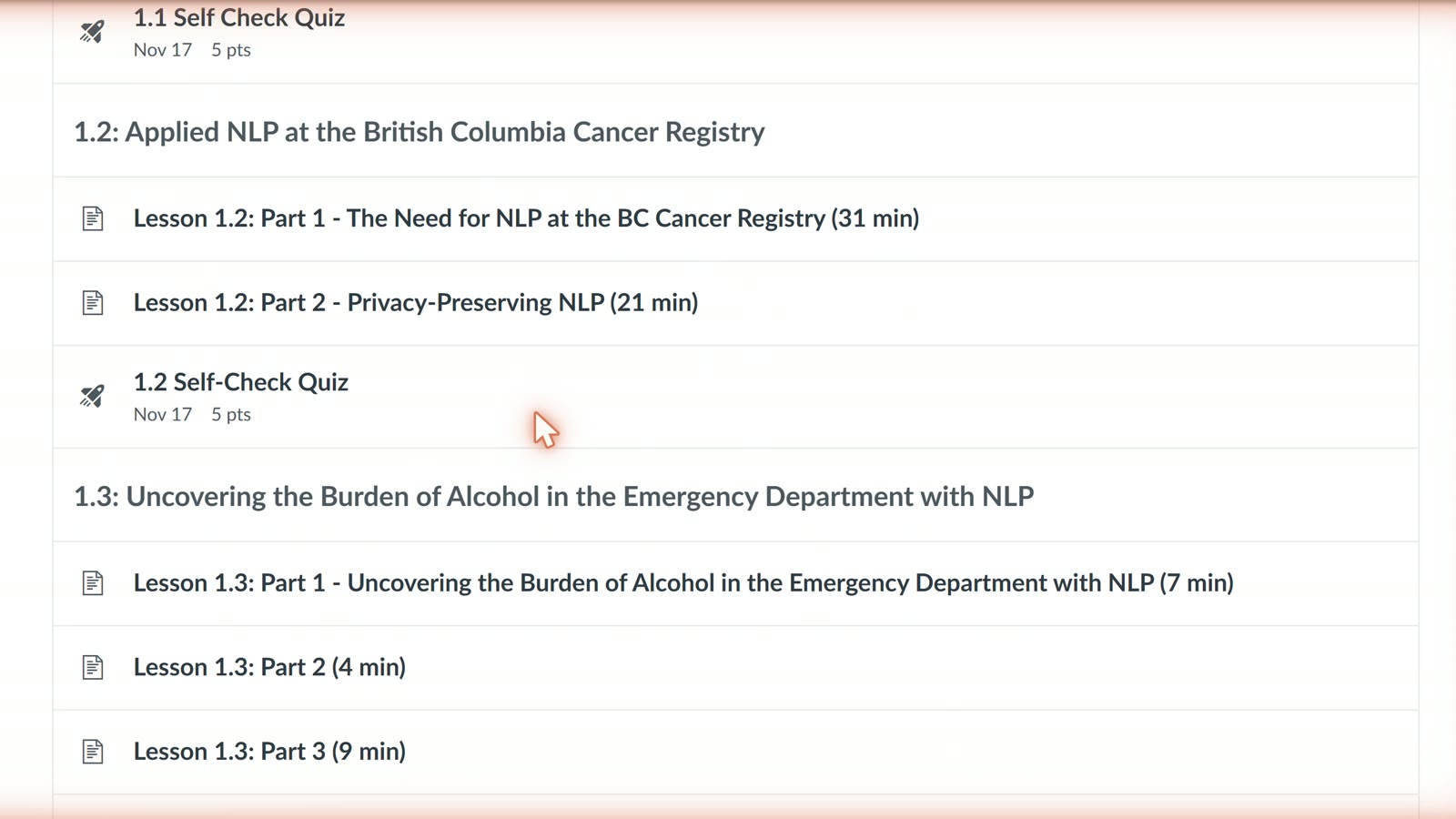
| 1. NLP 应用案例与工作流程 | BC 癌症登记处、保护隐私的 NLP、急诊科里的酒精负担、电动滑板车受伤、出院障碍,以及没有标注数据时怎样用 NLP |
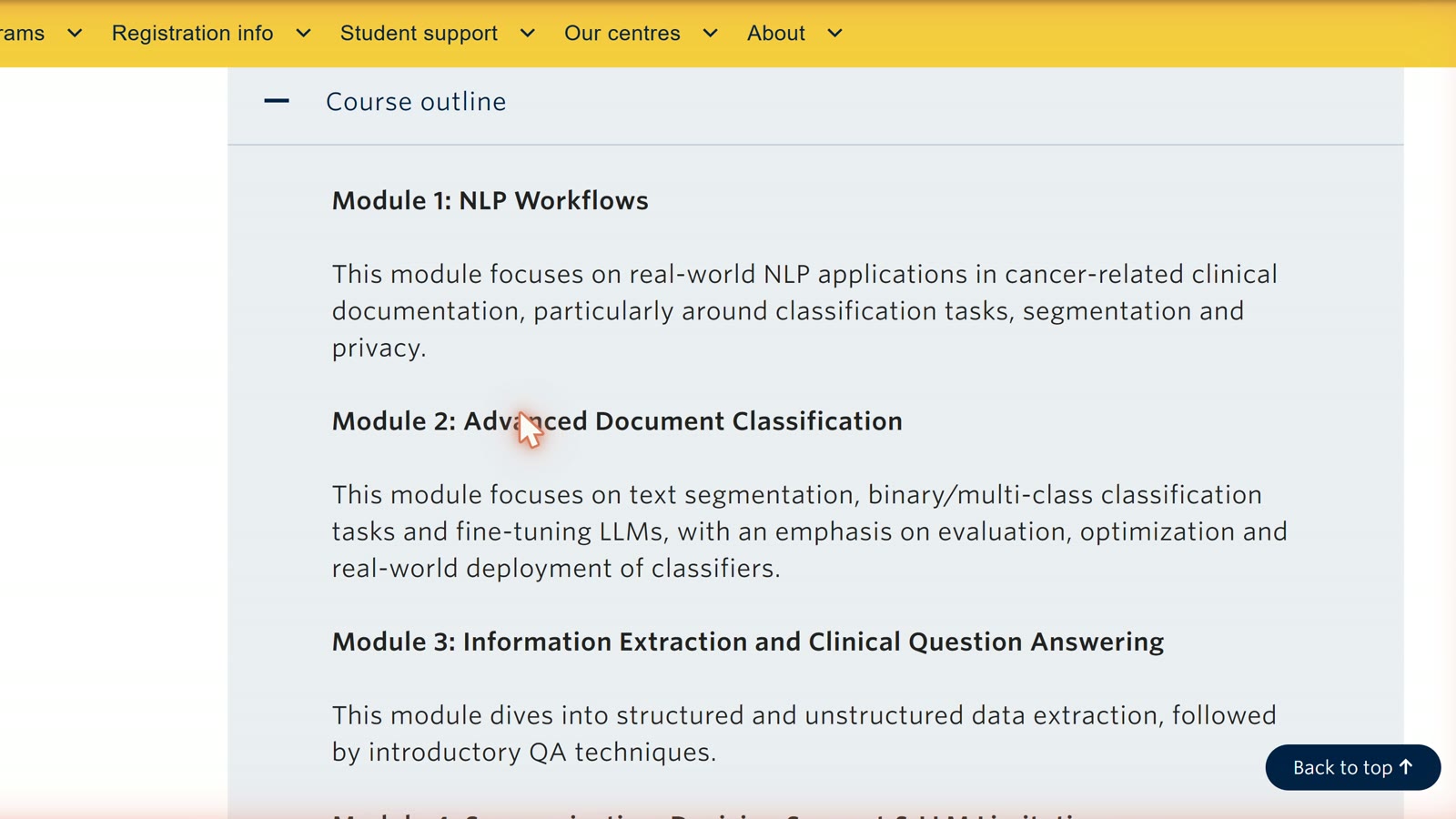
| 2. 进阶文档分类 | 把报告切分成段落、筛选癌症登记处需要哪些病理报告、把它们分到诊断组、集成方法与大语言模型微调 |
| 3. 信息提取与临床问答 | 从报告中提取关注的字段,以及用大语言模型做问答 |
| 4. 摘要、决策支持与总结 | 临床文档摘要、AI 病历书写助手、患者的就医历程,以及这些模型在临床中的局限 |
Four modules
The course opens with real projects and then works through the main tasks:
| Module | What it covers |
|---|---|
| 1. NLP Example Use Cases and Workflows | The B.C. Cancer Registry, privacy-preserving NLP, the burden of alcohol in the emergency department, e-scooter injuries, barriers to hospital discharge, and NLP with unlabelled data |
| 2. Advanced Document Classification | Splitting a report into sections, filtering which pathology reports a cancer registry needs, sorting them into diagnostic groups, ensembling and fine-tuning LLMs |
| 3. Information Extraction and Clinical Question Answering | Extracting fields of interest from reports, and question answering with large language models |
| 4. Summarization, Decision Support and Conclusions | Summarizing clinical documents, AI scribes, the clinical journey of patients, and the limits of these models in clinical care |
我学到哪了,以及第一印象
我现在还在起步阶段:学完了模块一,在 Colab 里配好了实验环境,发了第一次讨论帖,现在正在学分类。
到目前为止,这门课分享的都是贴近实际的真实案例。实验做起来比较容易,但这些案例让我整体认识到 NLP 在医疗中是怎样应用的,而且更贴近现实。
Where I am, and my first impression
I'm still near the beginning: I've finished module one, set up the lab in Colab and posted my first discussion, and now I'm working through classification.
So far, the course has shared real cases that are close to practice. The labs are fairly easy to complete, but the cases give me a general understanding of how NLP is applied in health care, in a way that is closer to reality.
接下来的笔记和视频
接下来在学这门课的过程中,我会把每个模块整理成网站上的笔记,每篇配一个视频,就像第一门课那样。
Notes and videos to come
As I work through the course, I'll turn each module into notes on this site, with a video for each one, as I did with the first course.
链接
- Extraction and Analysis of Clinical Documents:UBC Extended Learning 上的课程页面。
- Natural Language Processing to Improve Patient Care:微证书项目和它的三门课。
- YouTube 上这门课的视频。
Links
- Extraction and Analysis of Clinical Documents: the course page on UBC Extended Learning.
- Natural Language Processing to Improve Patient Care: the micro-certificate and its three courses.
- Videos from this course on YouTube.