UBC · Overview of NLP and LLMs / UBC00
UBC's Overview of NLP and Large Language Models: the Whole Course at a Glance
My first course is finished: Overview of NLP and Large Language Models, from UBC Extended Learning. This page puts the whole course in one place: the program it belongs to, how it runs, who teaches it, what the course site looks like, how its four modules became my eight notes, and what I took away.
- section
- key term
- reading note
The course and its program
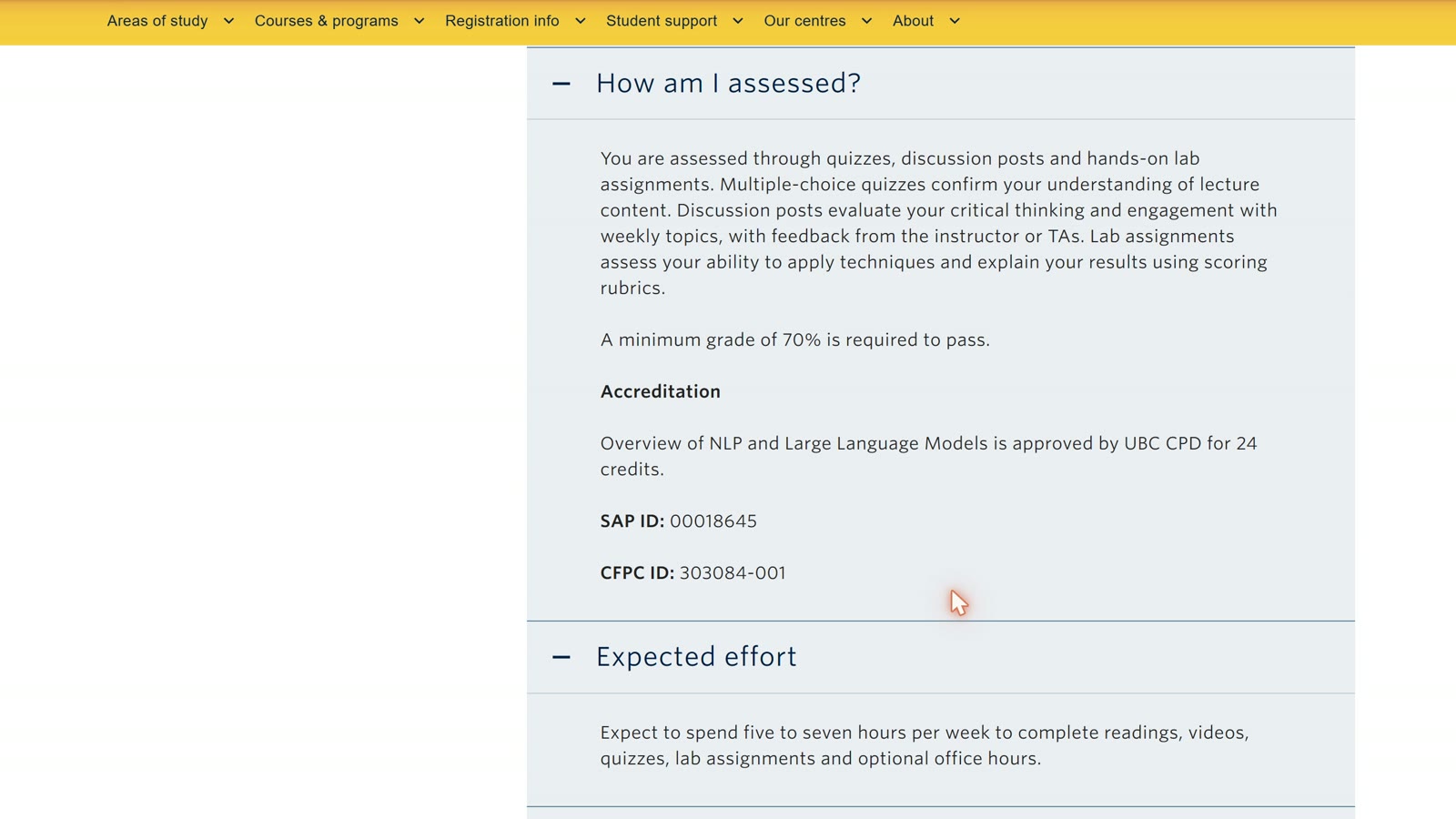
The course is the first of three five-week courses in UBC's micro-certificate Natural Language Processing to Improve Patient Care. The program was developed by UBC's Department of Medicine and the UBC Data Science Institute, in partnership with B.C.'s regional health authorities, for health care providers, researchers and administrators. UBC recommends starting with this course if you are new to NLP.
| Format | 100% online, with weekly instructor office hours |
| Length | Five weeks; the three-course program takes about 75 hours in total |
| Cost | $1,025 per course, $3,075 for the program |
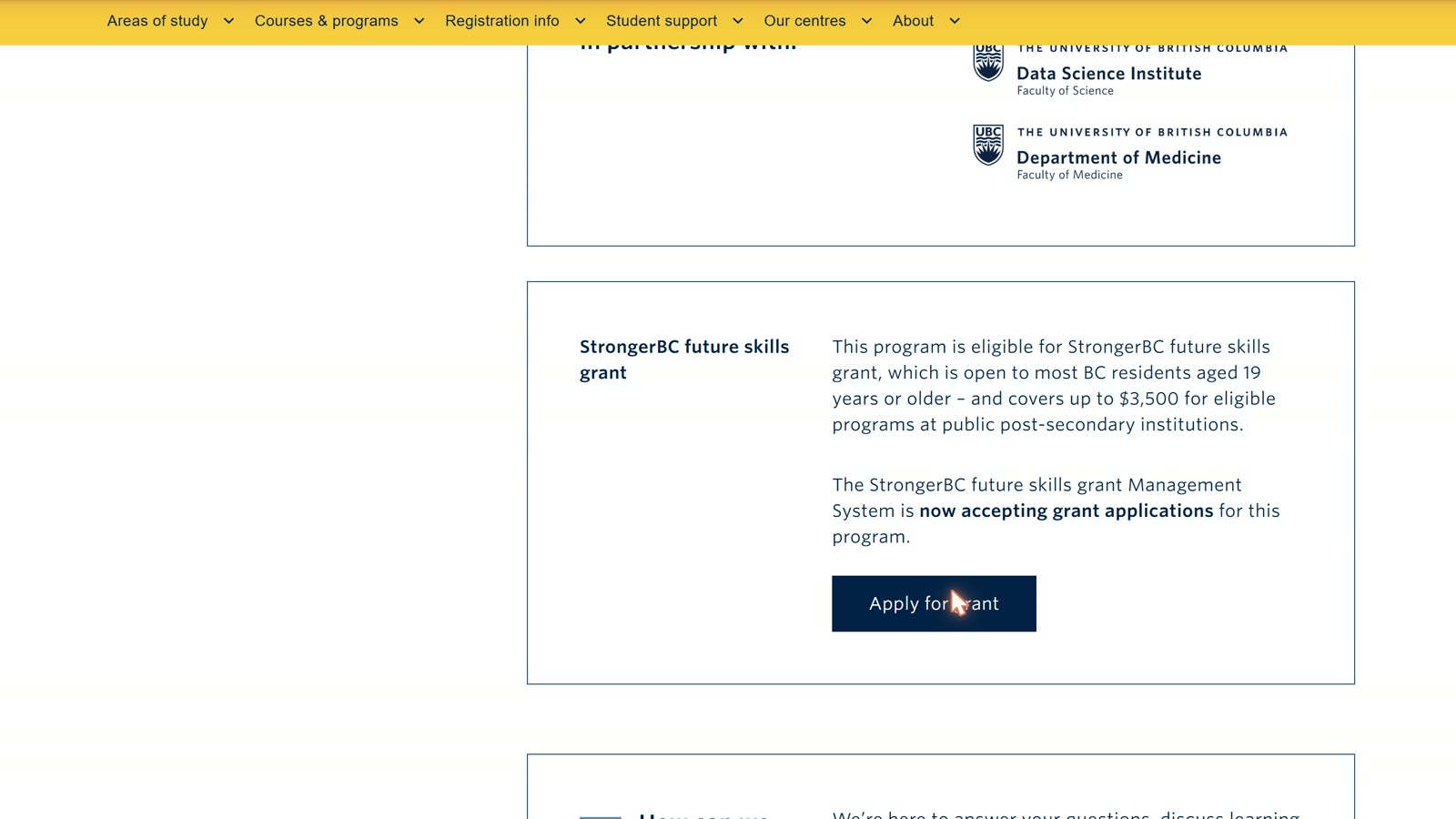
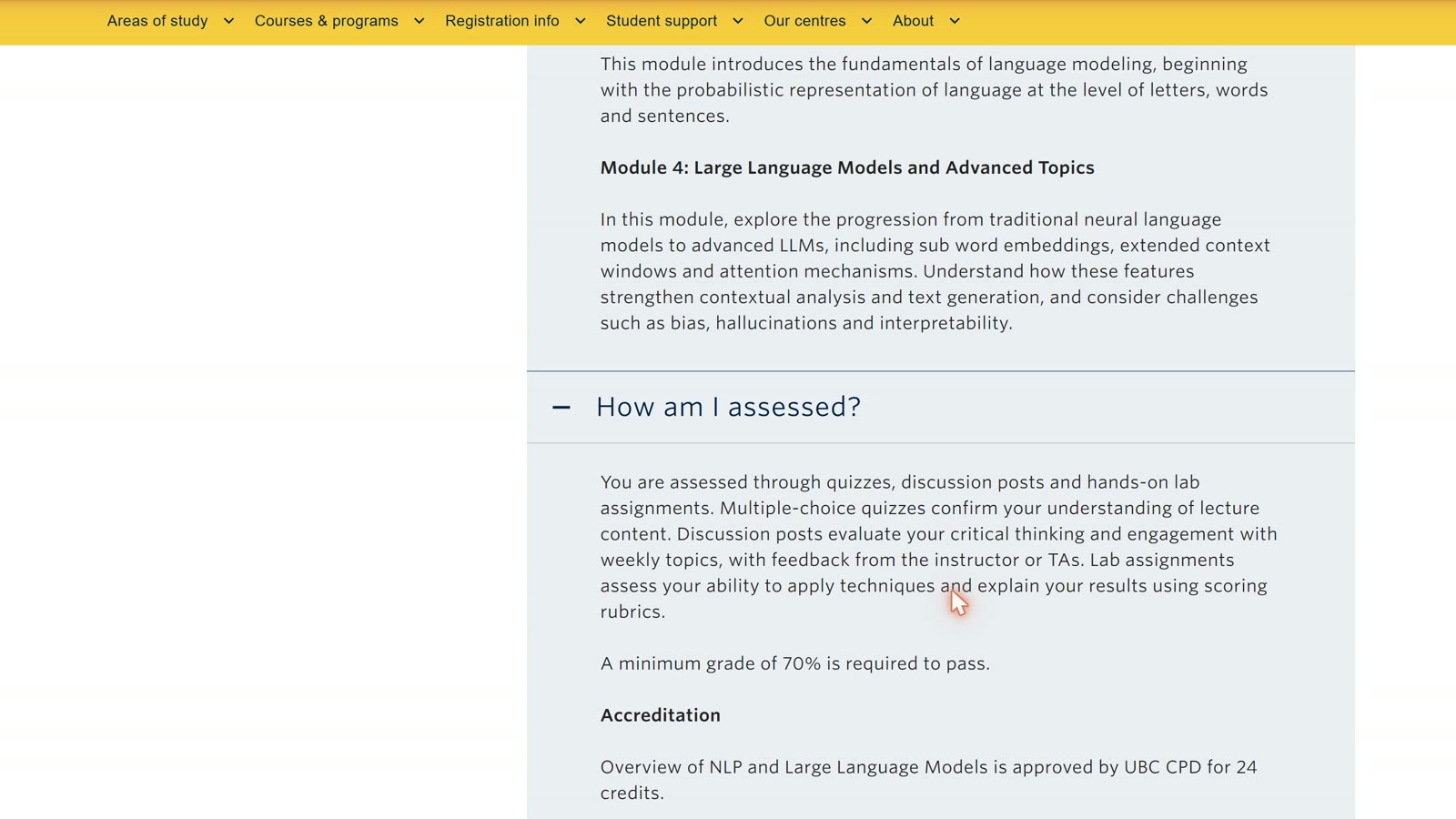
| To pass | A minimum grade of 70%; the course is approved by UBC CPD for 24 credits |
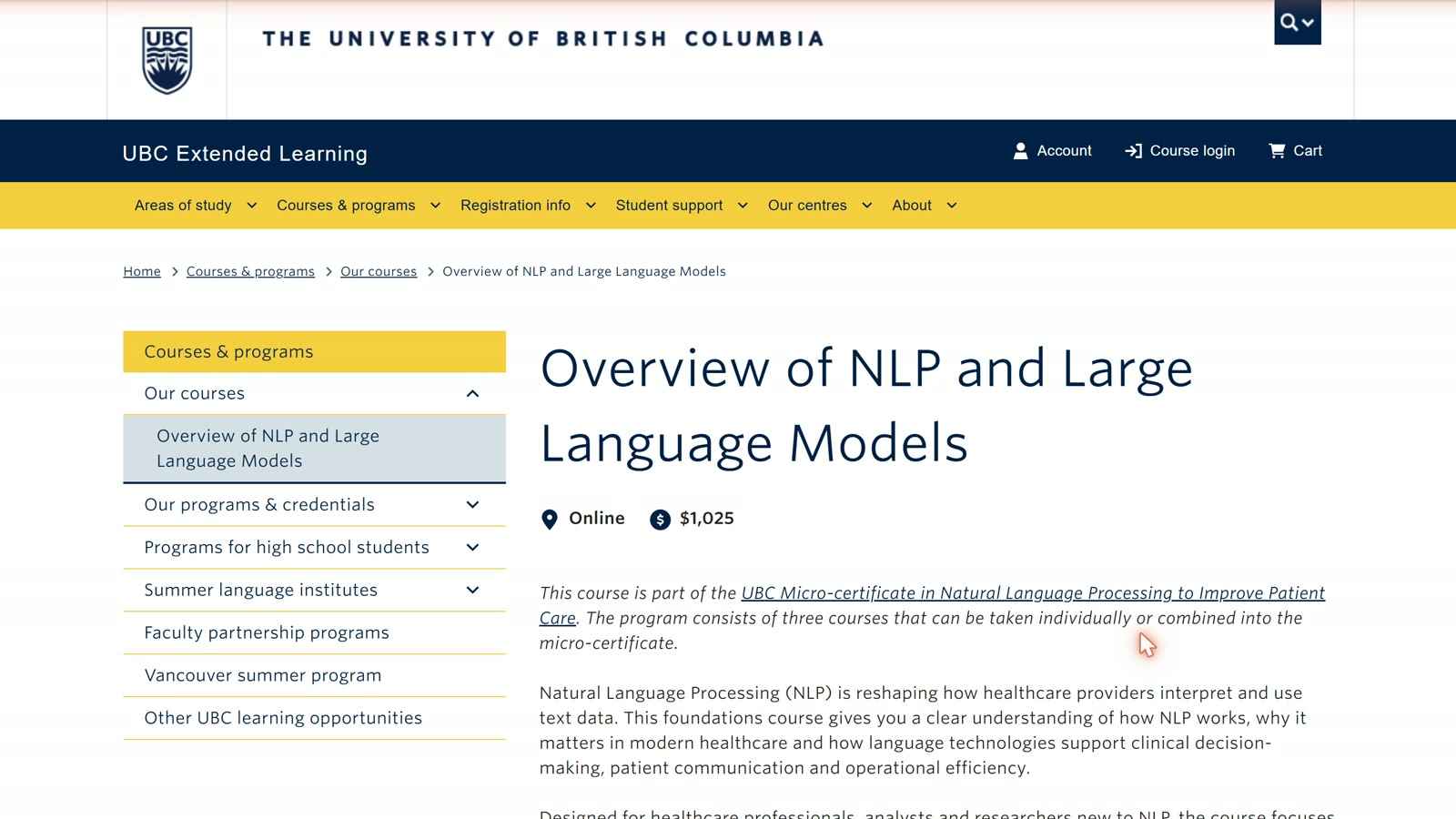
Living in B.C.? The program is eligible for the StrongerBC future skills grant, which is open to most B.C. residents aged 19 or older and covers up to $3,500 for eligible programs at public post-secondary institutions.
How it runs
You work at your own pace within weekly deadlines, about five to seven hours a week. Each week includes videos, a quiz, a hands-on lab and a discussion post. Once a week there is a one-hour live session with the instructor, where you can ask questions.
Assessment is through multiple-choice quizzes, discussion posts (with feedback from the instructor or TAs) and lab assignments marked with rubrics.
The instructor
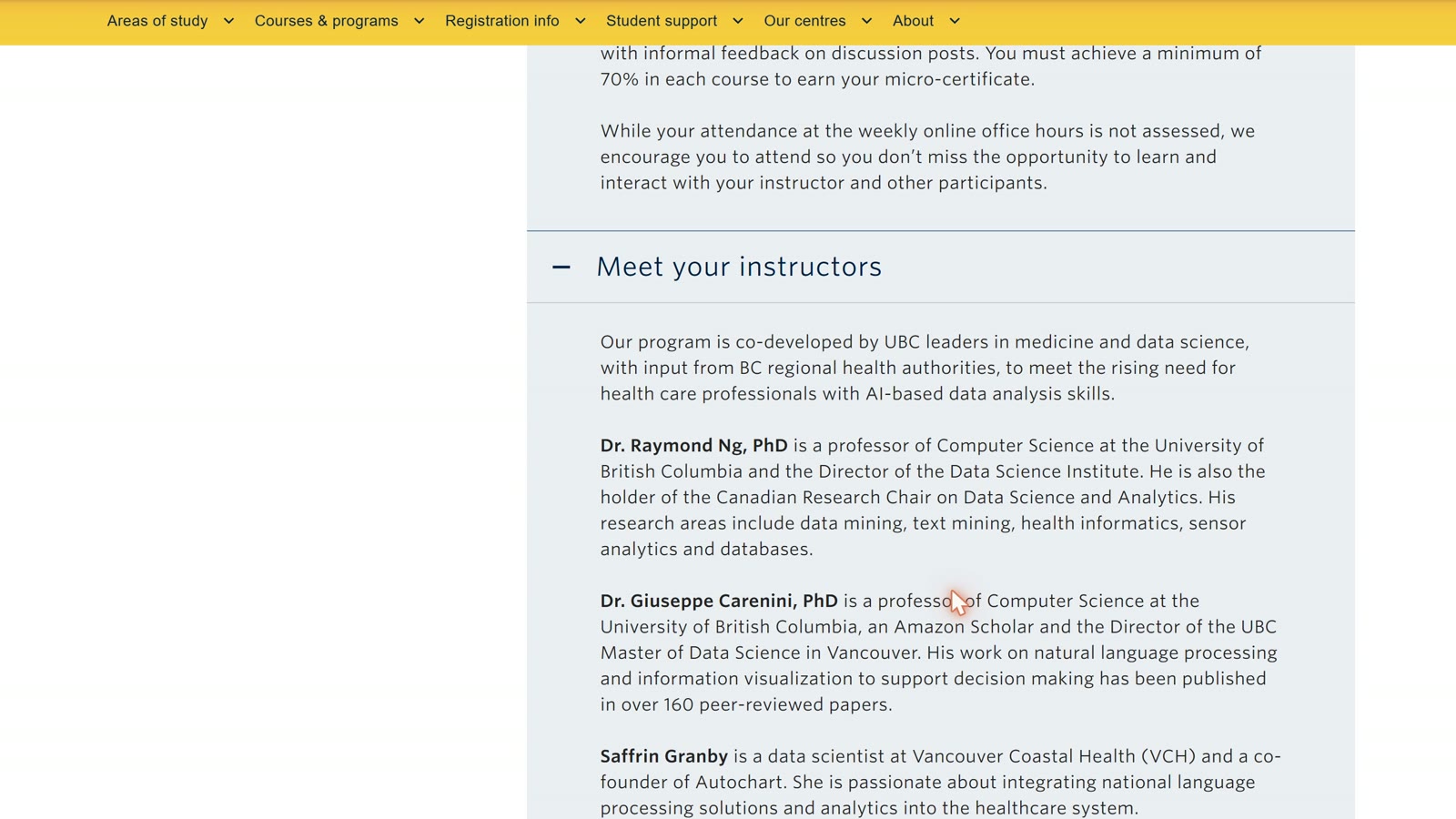
The course is taught by Giuseppe Carenini, a professor of computer science at UBC and the Director of the UBC Master of Data Science in Vancouver. His work on natural language processing and information visualization to support decision making has been published in more than 160 peer-reviewed papers.
Inside the course site
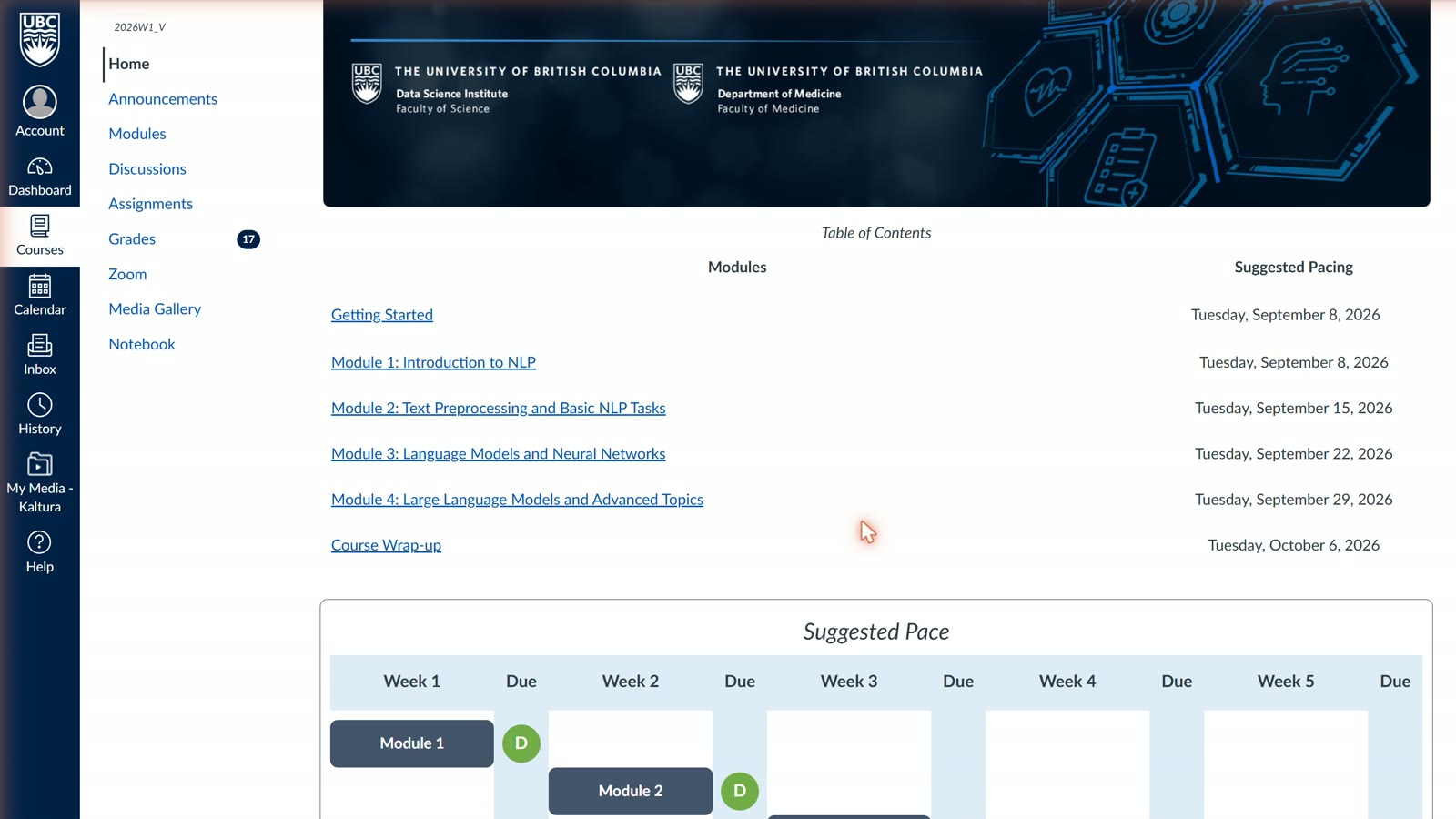
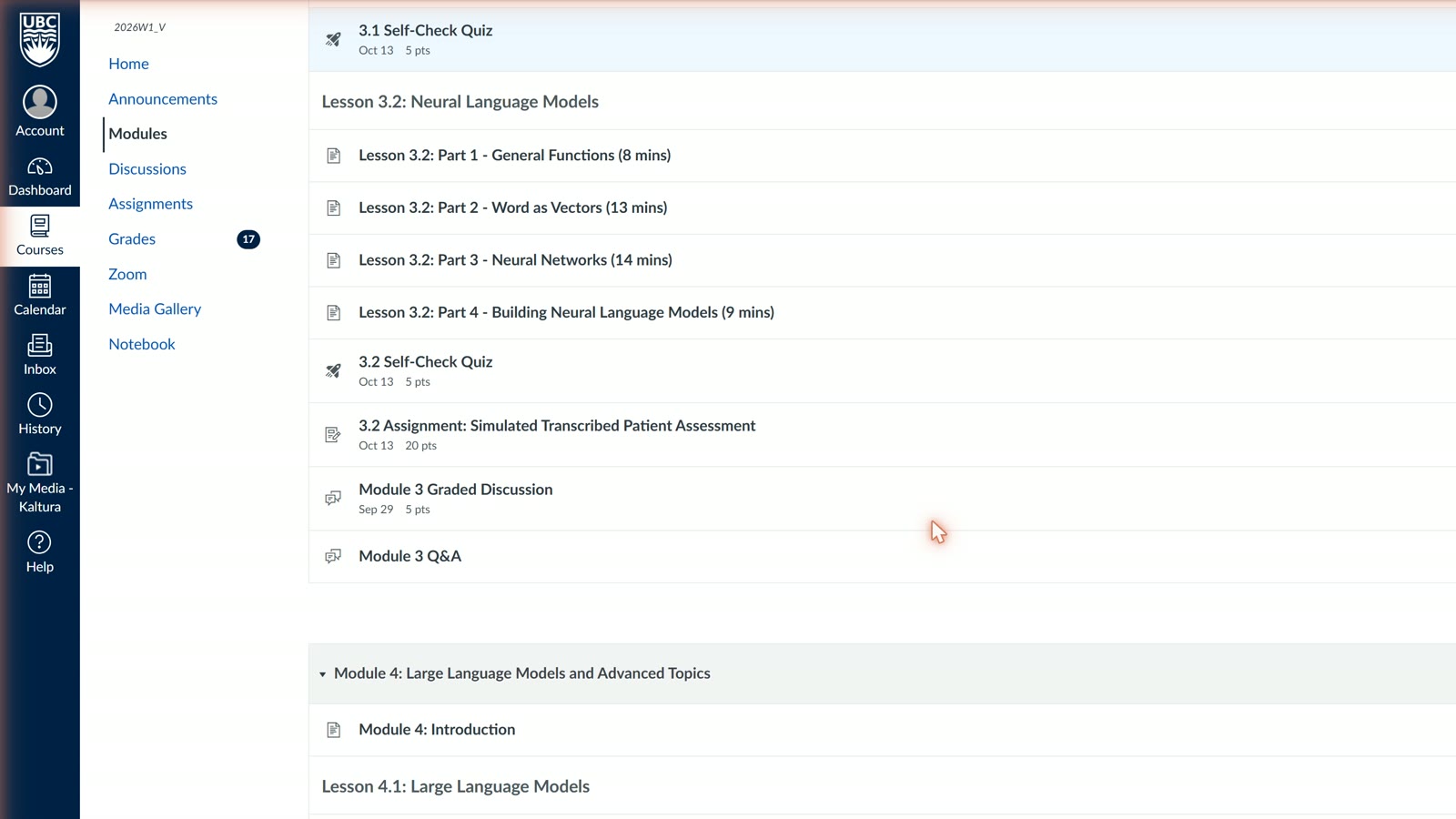
On the course site, four modules are spread over five weeks. Each lesson is split into short videos, followed by a self-check quiz; then come the labs and a graded discussion. The labs were my favourite part: I wrote regular expressions, cleaned and normalized text, and transcribed a simulated patient interview, which became my Buzz video.
Four modules, eight notes
Each module became two of my notes, and each note has its own video:
| Module | My notes |
|---|---|
| Module 1: Introduction to NLP | NLP001 · NLP: from language to research applications NLP002 · Basic Text Processing |
| Module 2: Text Preprocessing and Basic NLP Tasks | NLP003 · Advanced Text Processing: Tokens, Sentences, and Labels NLP004 · From Word Meaning to Knowledge Graphs |
| Module 3: Language Models and Neural Networks | NLP005 · The Basis of Language Models: Probability NLP006 · Neural Language Models |
| Module 4: Large Language Models and Advanced Topics | NLP007 · Large Language Models: Tokens, Attention, Prompting and Reasoning NLP008 · Open Issues in Large Language Models |
My takeaway
For me, the concepts were fairly easy to follow. Without a technical background, some of them may feel hard at first, but the course builds up step by step. The professor sometimes spends extra time on technical ideas. I approached those ideas through my experience in clinical research, pulling out the logic I felt I really had to understand. That is what my notes and videos are built on.
What's next
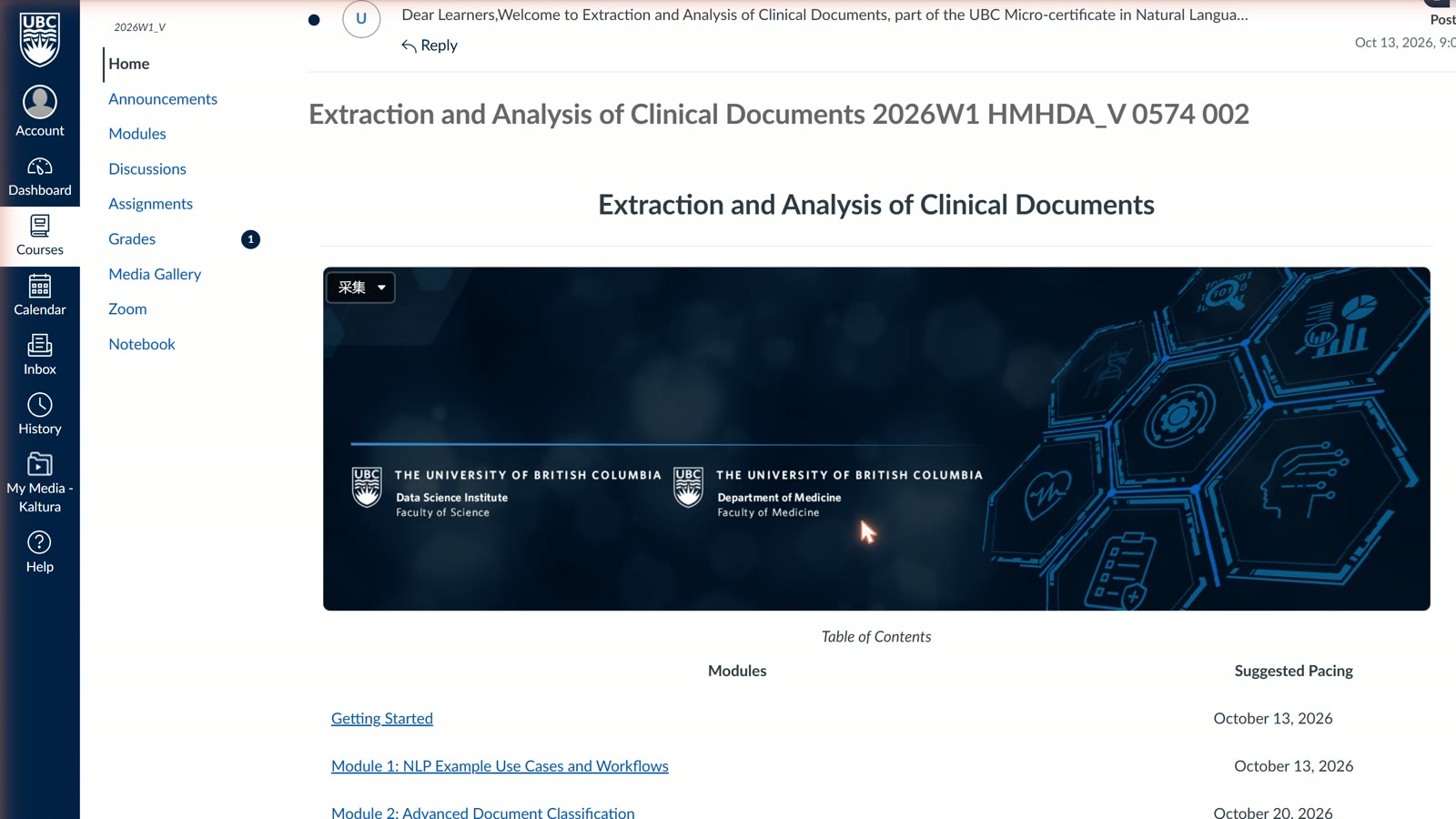
I am continuing with two courses: Stanford's Probability for AI, to learn the math these models are built on, and the second UBC course, Extraction and Analysis of Clinical Documents, which takes these ideas into clinical notes.
Links
- Overview of NLP and Large Language Models: the course page on UBC Extended Learning.
- Natural Language Processing to Improve Patient Care: the micro-certificate, its instructors and the StrongerBC grant.
- All the note videos on YouTube.