UBC · NLP 与大语言模型概论 / UBC00
UBC Overview of NLP and Large Language Models:整门课总览
我的第一门课已经学完:UBC Extended Learning 的 Overview of NLP and Large Language Models。这一篇把整门课集中在一起:它属于哪个项目、怎么上、谁在教、课程网站长什么样、四个模块怎样变成我的八篇笔记,以及我的感受。
UBC's Overview of NLP and Large Language Models: the Whole Course at a Glance
My first course is finished: Overview of NLP and Large Language Models, from UBC Extended Learning. This page puts the whole course in one place: the program it belongs to, how it runs, who teaches it, what the course site looks like, how its four modules became my eight notes, and what I took away.
- 章节 / section
- 关键概念 / key term
- 阅读提示 / reading note
这门课和它所属的项目
这门课是 UBC 微证书项目 “用自然语言处理改善患者照护”(Natural Language Processing to Improve Patient Care)三门五周课程中的第一门。项目由 UBC 医学系和 UBC 数据科学研究所开发,并与 BC 省各地区卫生局合作,面向医疗服务提供者、研究人员和管理人员。UBC 建议刚接触 NLP 的人从这门课开始。
| 形式 | 完全线上,每周有讲师答疑时间 |
| 时长 | 五周;三门课的整个项目约 75 小时 |
| 费用 | 每门 1,025 加元,整个项目 3,075 加元 |
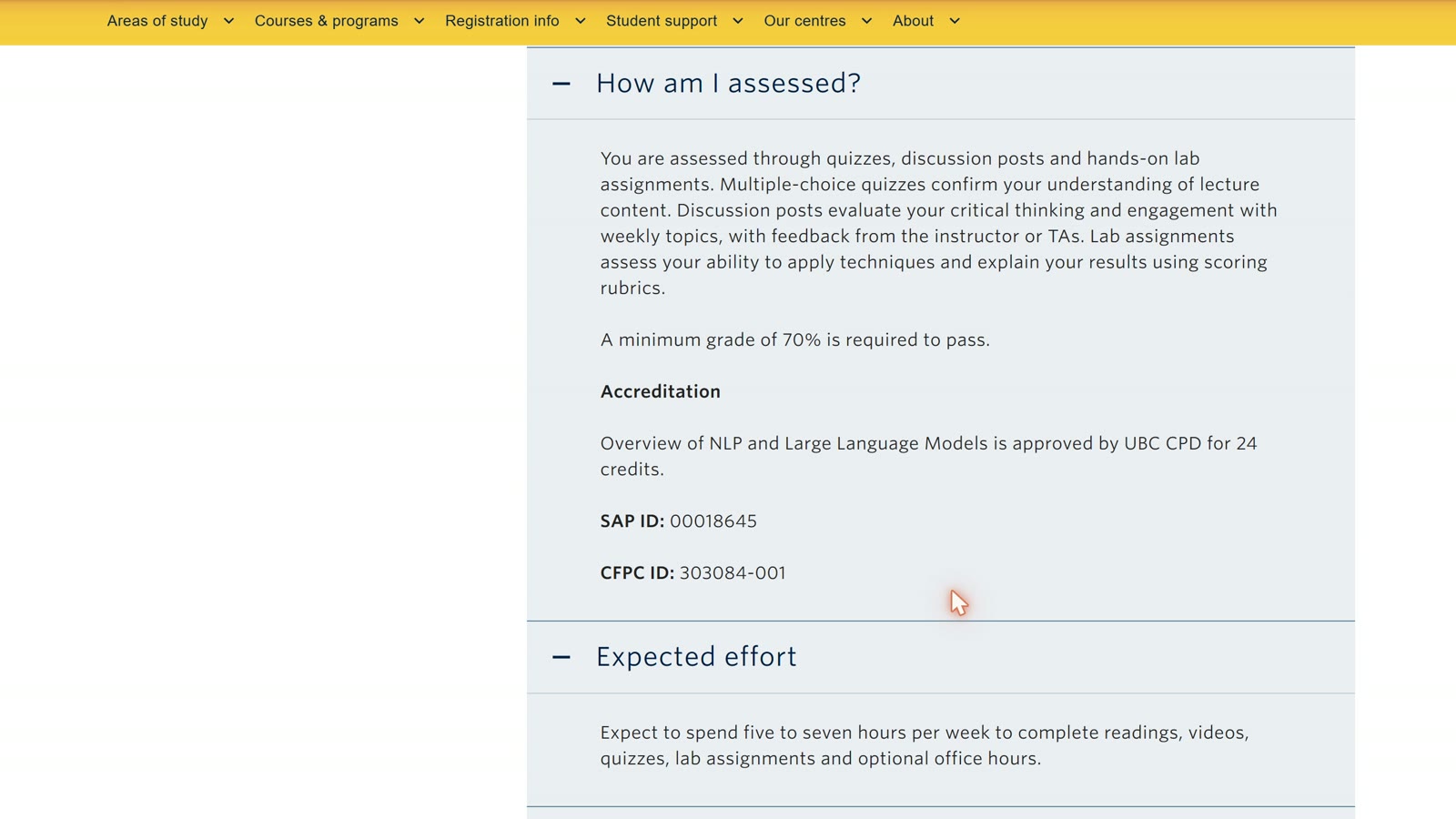
| 通过要求 | 成绩至少 70%;课程获 UBC CPD 认可 24 学分 |
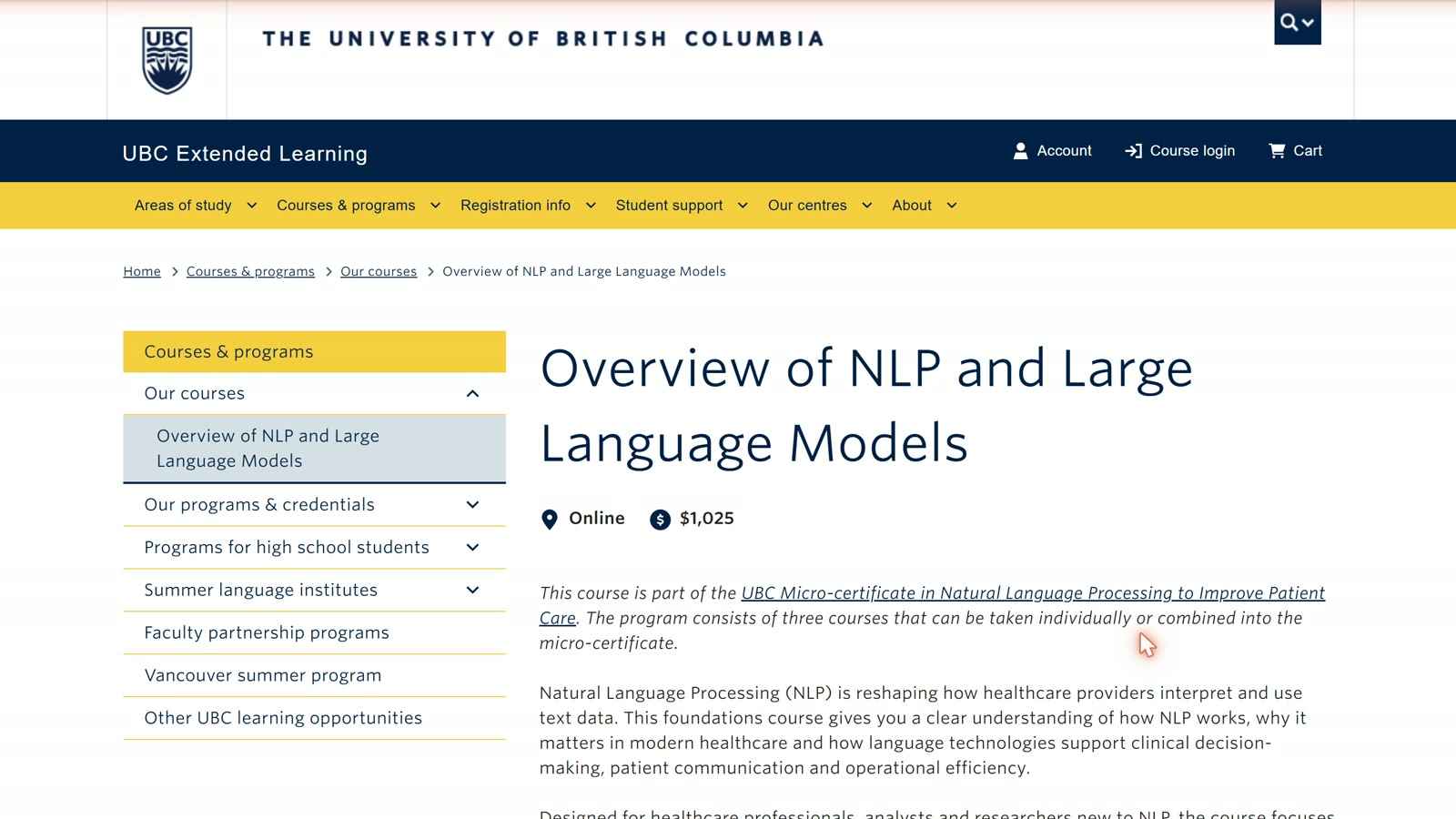
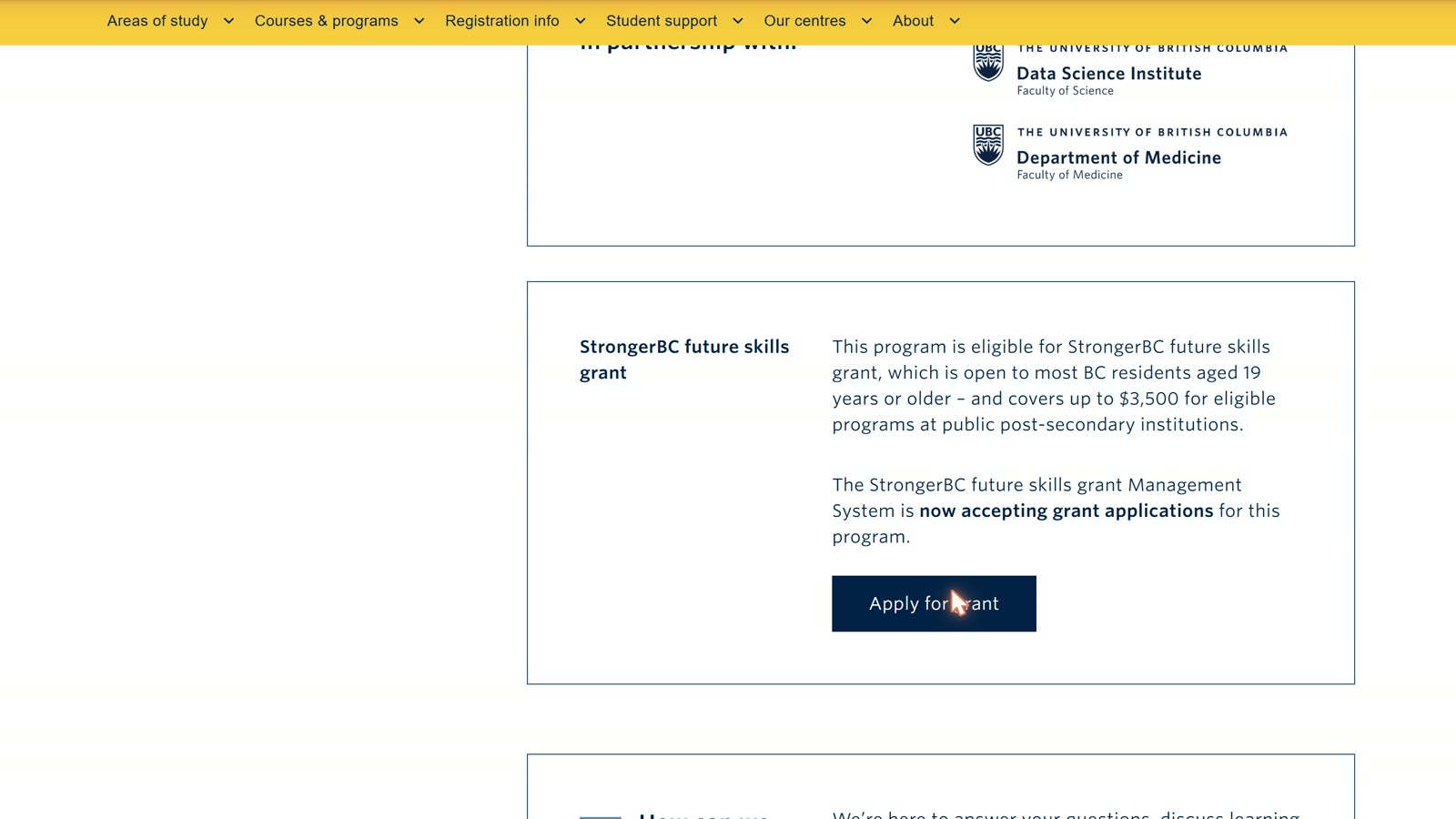
住在 BC 省?这个项目可以申请 StrongerBC 未来技能补助。大多数 19 岁及以上的 BC 居民都可以申请,公立高校的合格项目最多可补助 3,500 加元。
The course and its program
The course is the first of three five-week courses in UBC's micro-certificate Natural Language Processing to Improve Patient Care. The program was developed by UBC's Department of Medicine and the UBC Data Science Institute, in partnership with B.C.'s regional health authorities, for health care providers, researchers and administrators. UBC recommends starting with this course if you are new to NLP.
| Format | 100% online, with weekly instructor office hours |
| Length | Five weeks; the three-course program takes about 75 hours in total |
| Cost | $1,025 per course, $3,075 for the program |
| To pass | A minimum grade of 70%; the course is approved by UBC CPD for 24 credits |
Living in B.C.? The program is eligible for the StrongerBC future skills grant, which is open to most B.C. residents aged 19 or older and covers up to $3,500 for eligible programs at public post-secondary institutions.
课程怎么上
在每周的截止日期之前按自己的节奏学习,每周大约五到七个小时。每周有视频、小测验、一个动手实验和一篇讨论帖。每周还有一次一小时的线上直播课,由讲师主持,可以在里面提问。
考核包括选择题小测验、讨论帖(讲师或助教会给反馈),以及按评分标准打分的实验作业。
How it runs
You work at your own pace within weekly deadlines, about five to seven hours a week. Each week includes videos, a quiz, a hands-on lab and a discussion post. Once a week there is a one-hour live session with the instructor, where you can ask questions.
Assessment is through multiple-choice quizzes, discussion posts (with feedback from the instructor or TAs) and lab assignments marked with rubrics.
讲师
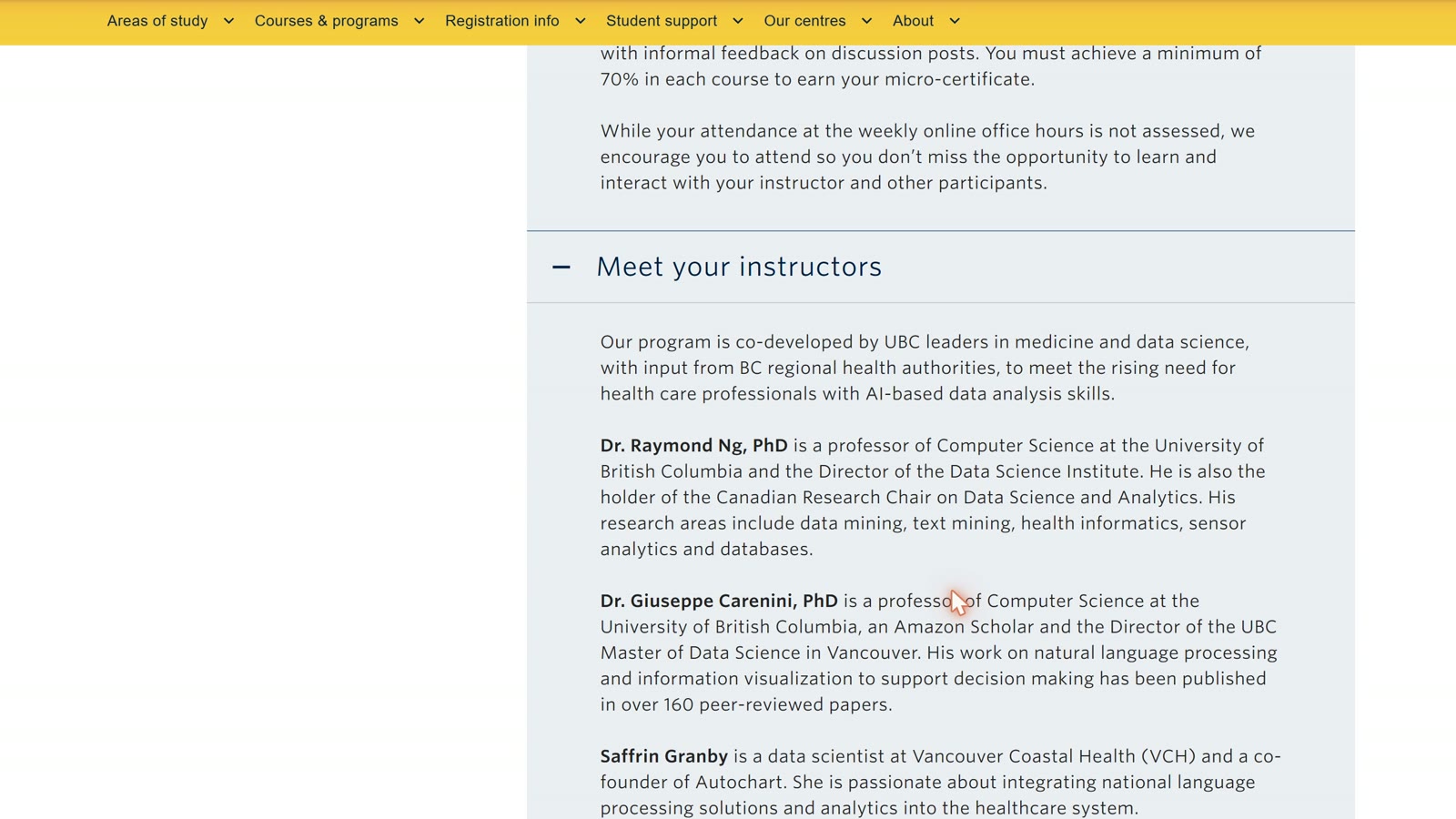
课程由 Giuseppe Carenini 主讲,他是 UBC 计算机科学教授,也是温哥华校区 UBC 数据科学硕士项目的主任。他在自然语言处理以及辅助决策的信息可视化方面的研究,已经发表了 160 多篇同行评审论文。
The instructor
The course is taught by Giuseppe Carenini, a professor of computer science at UBC and the Director of the UBC Master of Data Science in Vancouver. His work on natural language processing and information visualization to support decision making has been published in more than 160 peer-reviewed papers.
课程网站里有什么
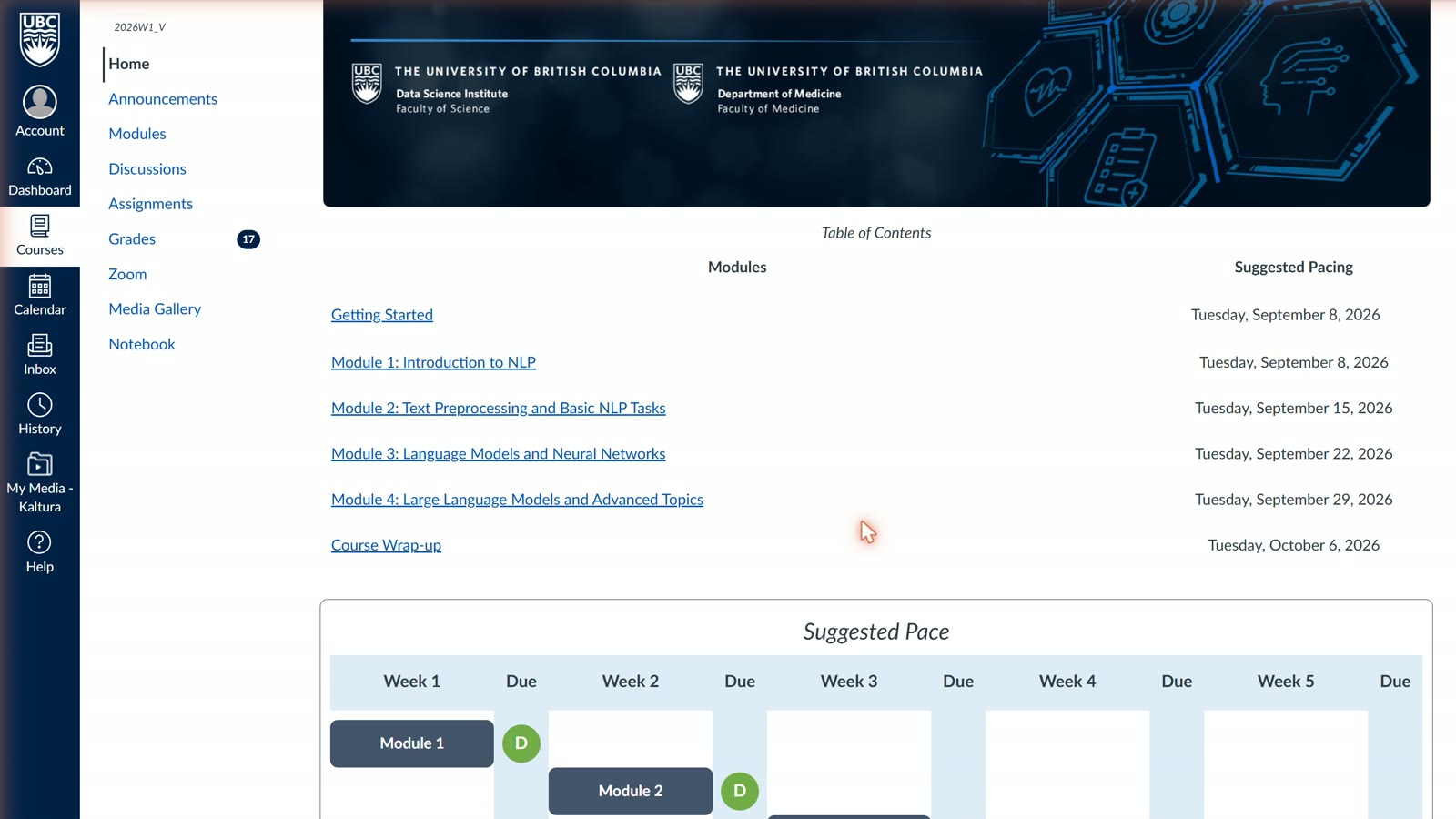
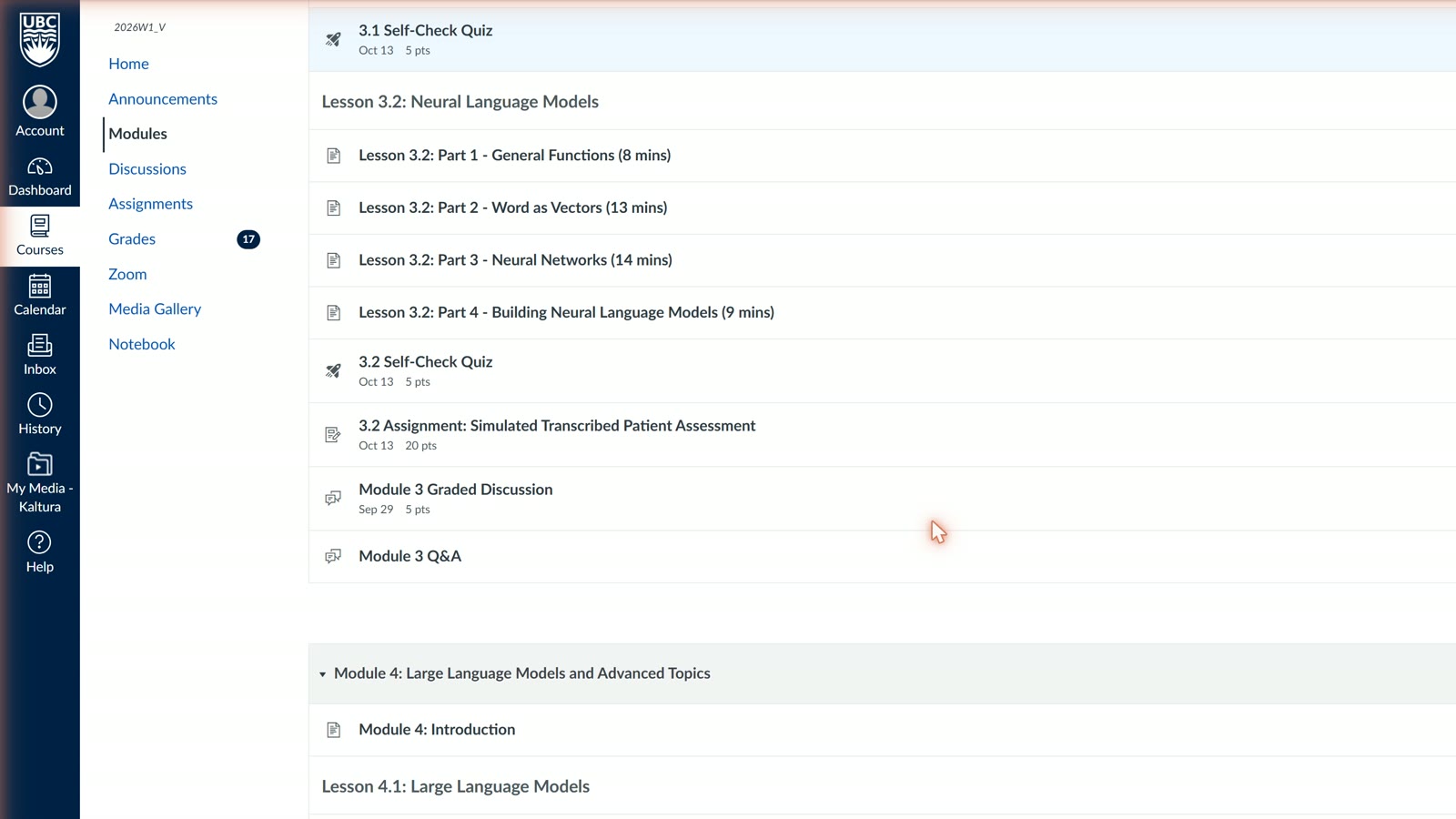
在课程网站上,四个模块分布在五周里。每节课拆成几个短视频,然后是一个自测小测验;接着是实验和计分的讨论。实验是我最喜欢的部分:我写了正则表达式,清洗和规范化文本,还转录了一段模拟的患者问诊,后来做成了我的 Buzz 视频。
Inside the course site
On the course site, four modules are spread over five weeks. Each lesson is split into short videos, followed by a self-check quiz; then come the labs and a graded discussion. The labs were my favourite part: I wrote regular expressions, cleaned and normalized text, and transcribed a simulated patient interview, which became my Buzz video.
四个模块,八篇笔记
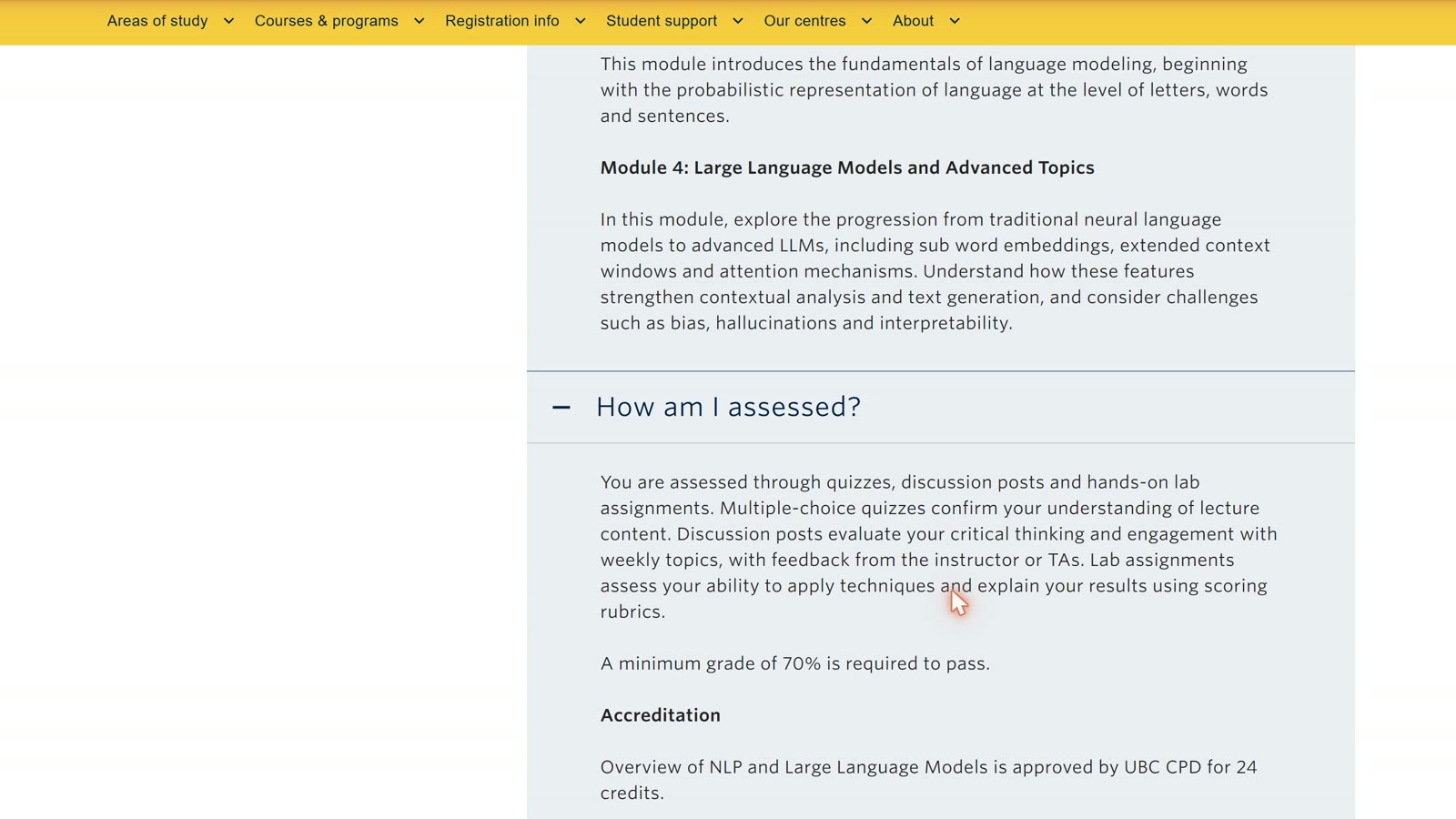
每个模块变成了我的两篇笔记,每篇笔记都有自己的视频:
| 模块 | 我的笔记 |
|---|---|
| 模块 1: NLP 入门 | NLP001 · NLP:从语言到研究应用 NLP002 · 基础文本处理 |
| 模块 2: 文本预处理与基础 NLP 任务 | NLP003 · 文本处理进阶:分词、句子切分与贴标签 NLP004 · 从词义到知识图谱 |
| 模块 3: 语言模型与神经网络 | NLP005 · 语言模型的基础:概率 NLP006 · 神经语言模型 |
| 模块 4: 大语言模型与进阶话题 | NLP007 · 大语言模型:token、注意力、提示与推理 NLP008 · 大语言模型的问题与改进 |
Four modules, eight notes
Each module became two of my notes, and each note has its own video:
| Module | My notes |
|---|---|
| Module 1: Introduction to NLP | NLP001 · NLP: from language to research applications NLP002 · Basic Text Processing |
| Module 2: Text Preprocessing and Basic NLP Tasks | NLP003 · Advanced Text Processing: Tokens, Sentences, and Labels NLP004 · From Word Meaning to Knowledge Graphs |
| Module 3: Language Models and Neural Networks | NLP005 · The Basis of Language Models: Probability NLP006 · Neural Language Models |
| Module 4: Large Language Models and Advanced Topics | NLP007 · Large Language Models: Tokens, Attention, Prompting and Reasoning NLP008 · Open Issues in Large Language Models |
我的感受
对我来说,这些概念还比较容易理解。如果没有技术背景,有些概念一开始可能会觉得难,但课程是循序渐进的。教授有时会着重讲一些技术上的概念,而我是从自己在临床研究里的经验出发去理解它们,提取出我觉得必须要理解的逻辑。我的笔记和视频,就是建立在这个基础上的。
My takeaway
For me, the concepts were fairly easy to follow. Without a technical background, some of them may feel hard at first, but the course builds up step by step. The professor sometimes spends extra time on technical ideas. I approached those ideas through my experience in clinical research, pulling out the logic I felt I really had to understand. That is what my notes and videos are built on.
接下来
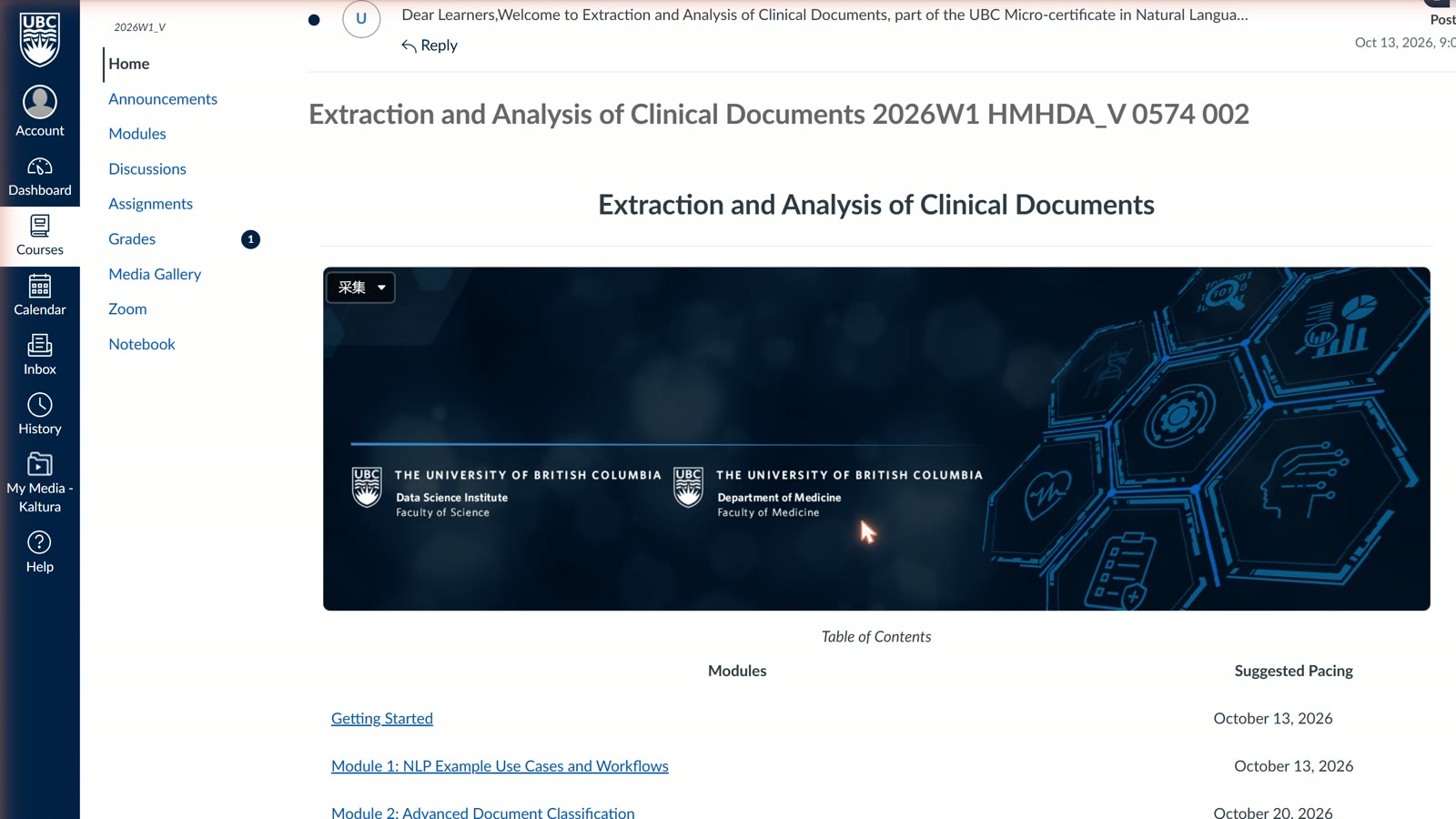
我会继续学两门课:斯坦福的 Probability for AI,学习这些模型背后的数学;以及 UBC 的第二门课 Extraction and Analysis of Clinical Documents,把这些概念用到临床记录上。
What's next
I am continuing with two courses: Stanford's Probability for AI, to learn the math these models are built on, and the second UBC course, Extraction and Analysis of Clinical Documents, which takes these ideas into clinical notes.
链接
- Overview of NLP and Large Language Models:UBC Extended Learning 上的课程页面。
- Natural Language Processing to Improve Patient Care:微证书项目、讲师介绍和 StrongerBC 补助。
- YouTube 上的全部笔记视频。
Links
- Overview of NLP and Large Language Models: the course page on UBC Extended Learning.
- Natural Language Processing to Improve Patient Care: the micro-certificate, its instructors and the StrongerBC grant.
- All the note videos on YouTube.