
A health researcher's notebook
I'm learning NLP in public, one note at a time.
Each note starts as a handwritten page. I redraw it, check it against the sources, and turn it into a short video. Papers get the same treatment: methods first, then what they could mean for practice.
 NLP010 · NLP at a cancer registry: pathology reports and privacy
The learning path
One row per course. Each stop is a note, its big picture and a video.
UBC · Overview of NLP and Large Language Models9 stops · course complete
- 1 start with the course
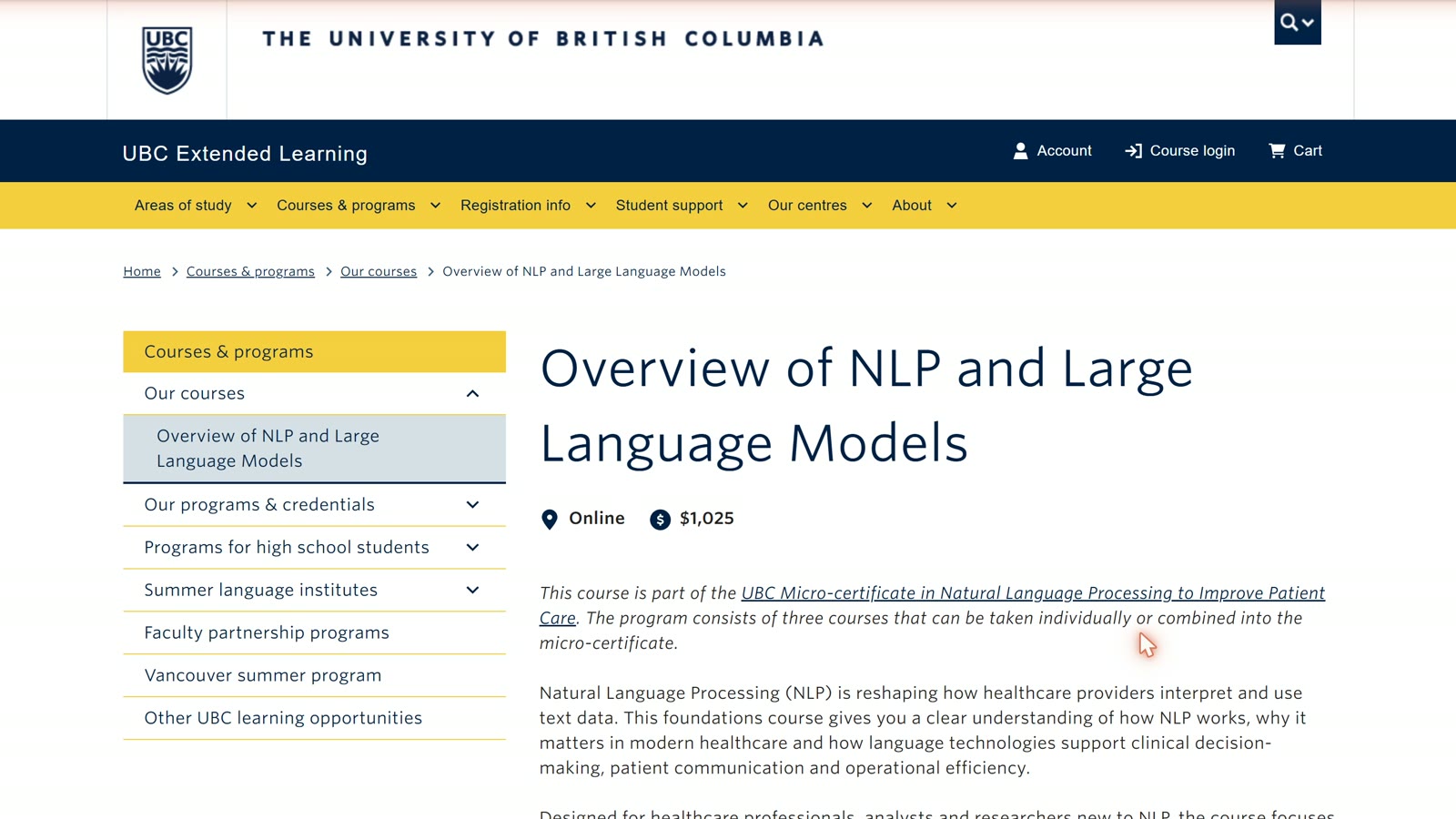 UBC's Overview of NLP and Large Language Models: the Whole Course at a Glance The whole UBC course in one place: the micro-certificate it belongs to (and the StrongerBC grant), how it runs, the instructor, the course site, and how four modules became eight notes.
- 2 new to NLP? start here
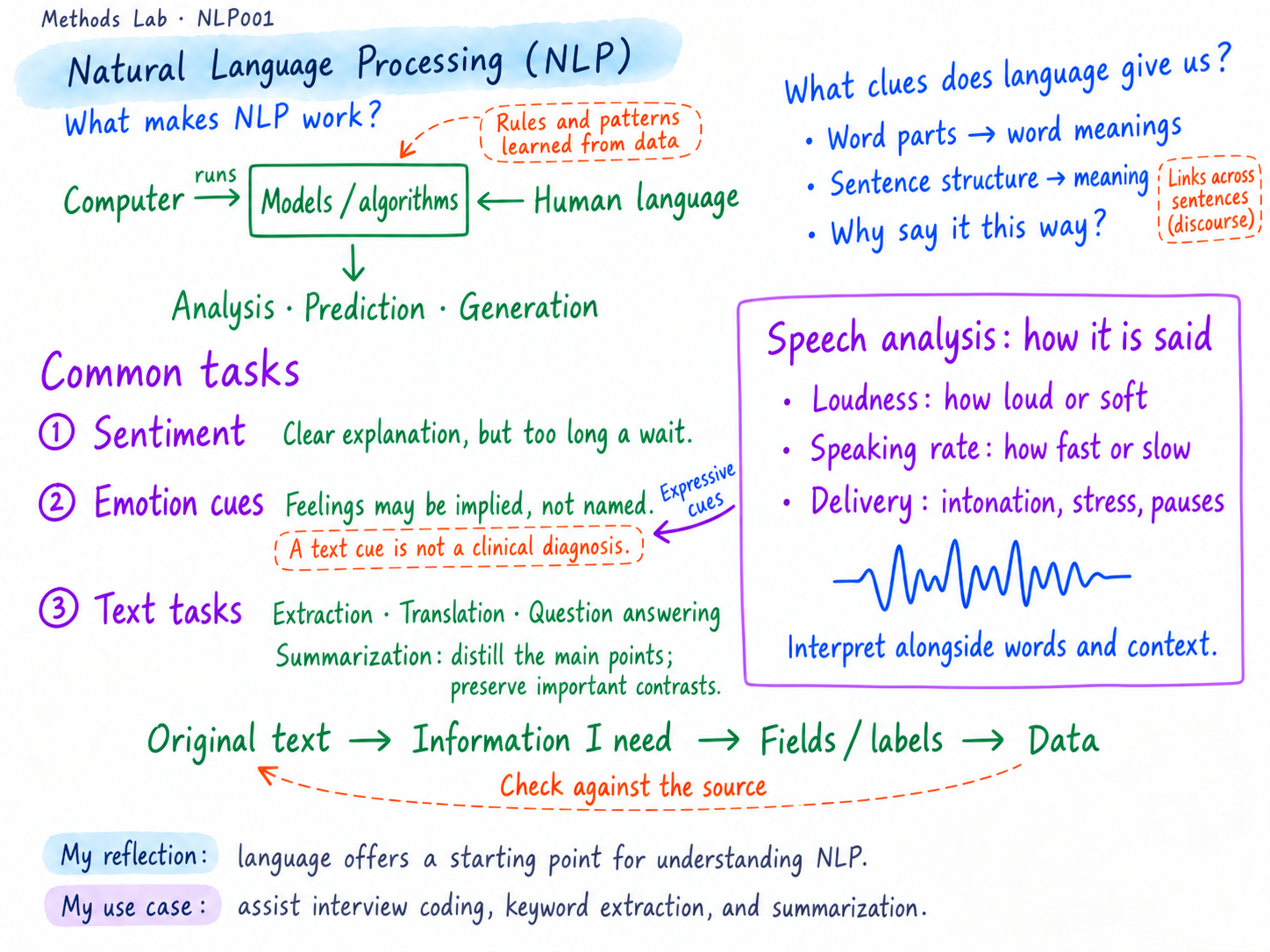 NLP: from language to research applications Words, context, and vocal cues: an introduction to natural language processing and its connection to interview research.
- 3
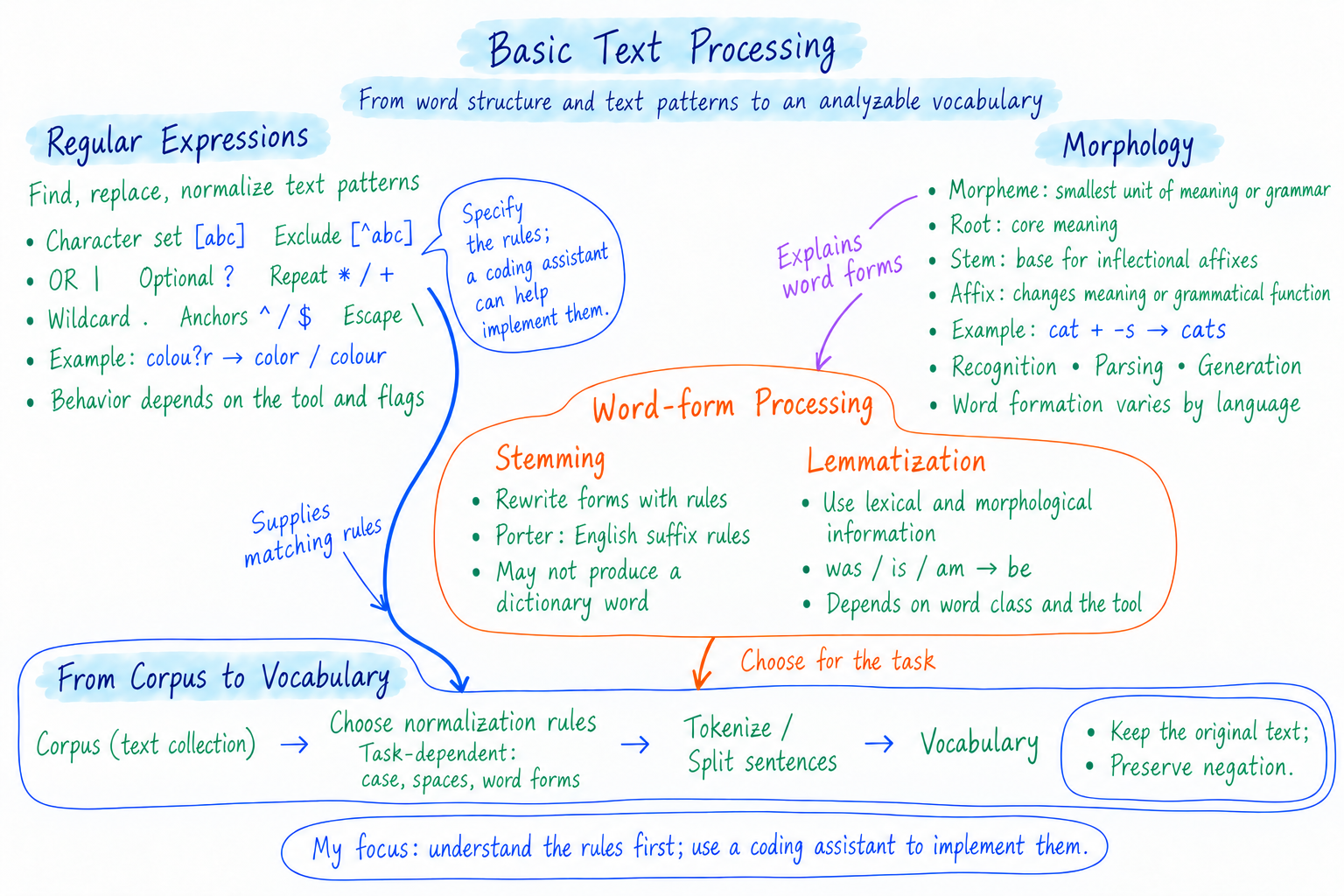 Basic Text Processing: From Word Structure to Pattern Matching Connect word structure, normalization and regular expressions to understand how text becomes material for analysis.
- 4
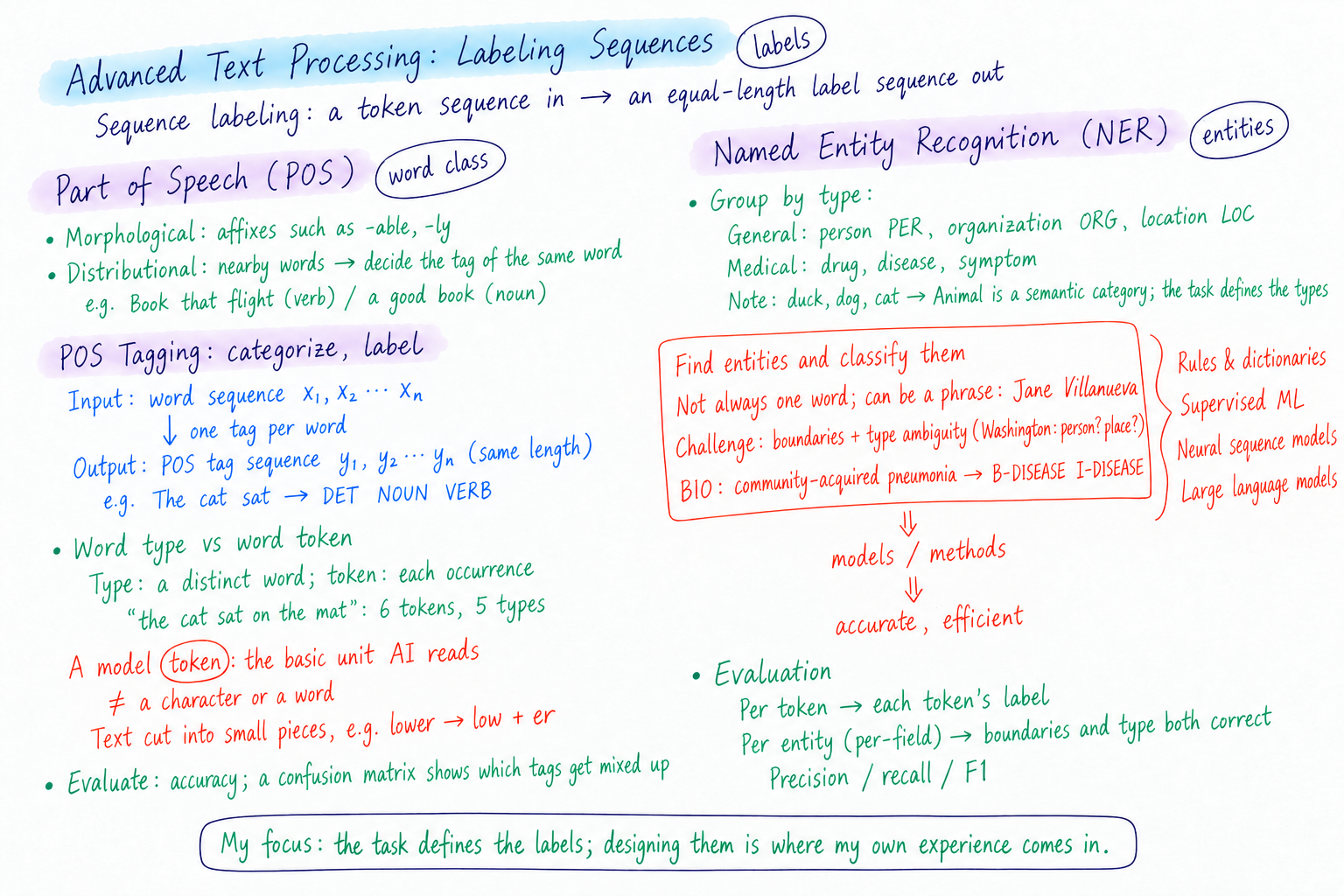 Advanced Text Processing: Tokens, Sentences, and Labels From tokens and sentence boundaries to POS tagging and named entity recognition: how text is split and labeled.
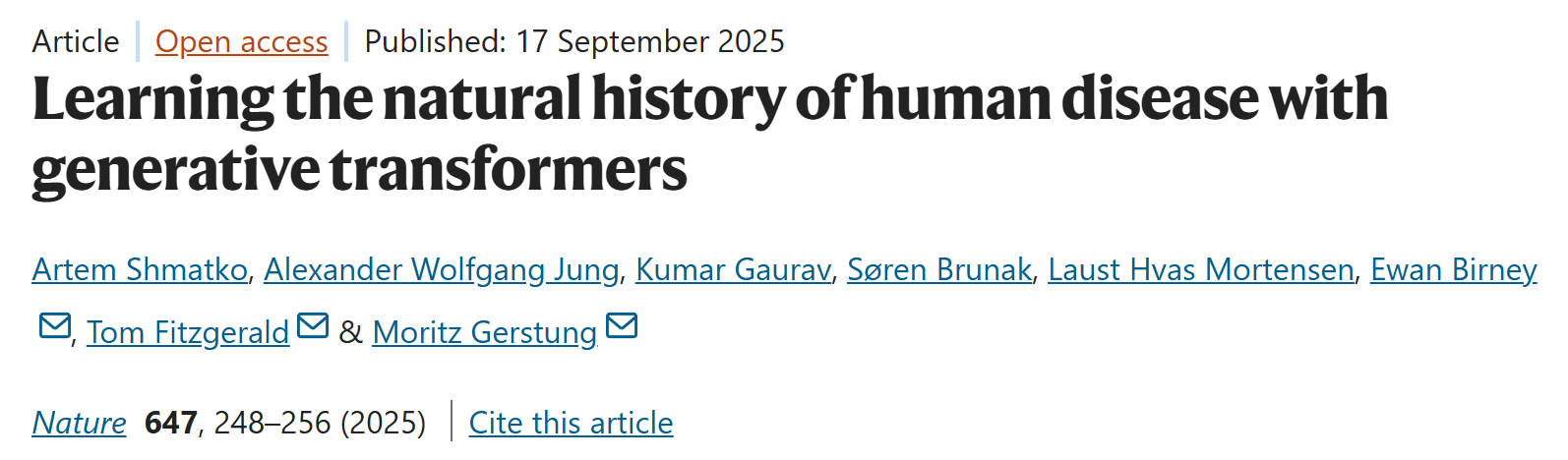 a paper on this pathLearning the natural history of human disease with generative transformers
- 5
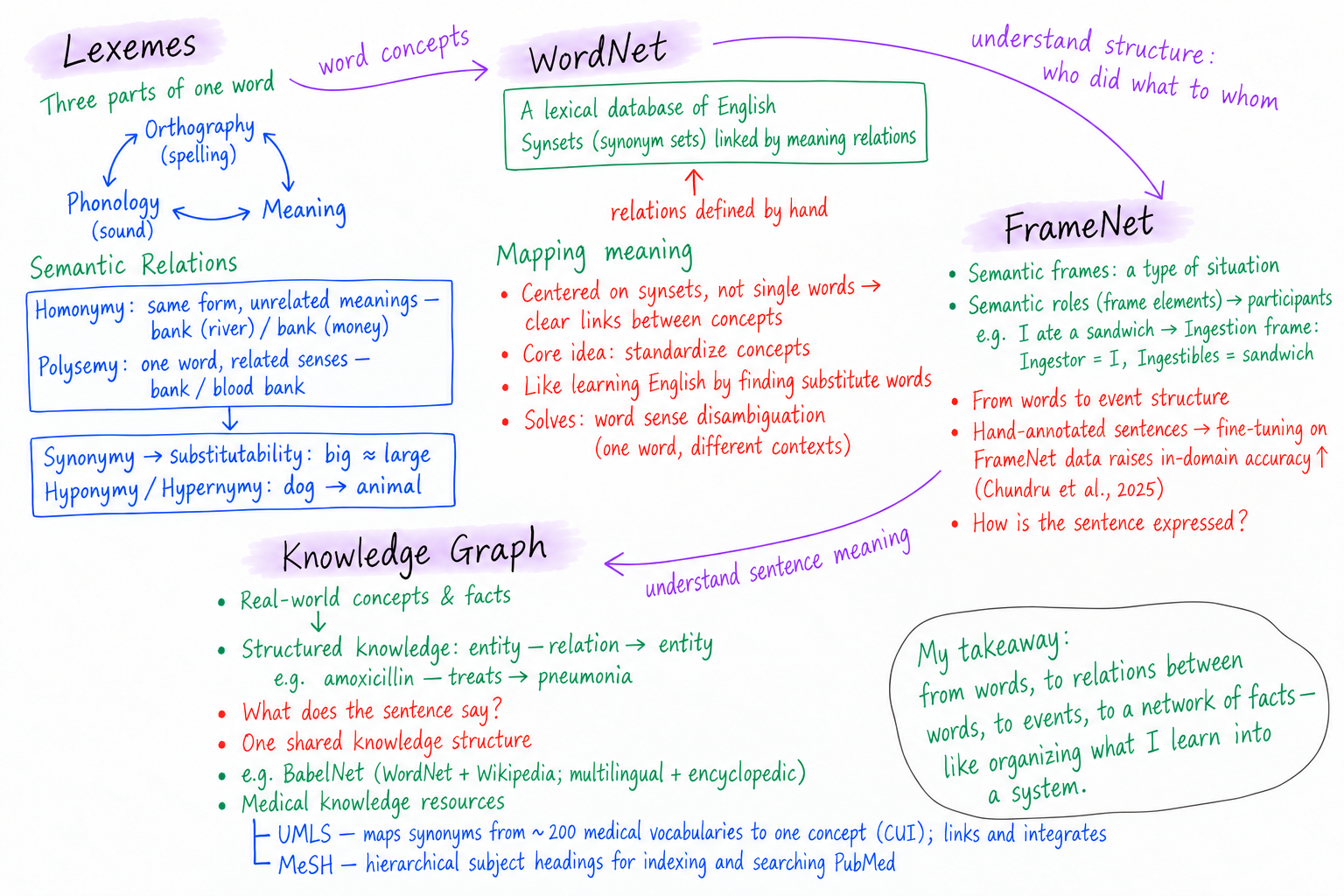 From Word Meaning to Knowledge Graphs: Lexemes, WordNet, FrameNet, and Knowledge Graphs From lexemes and word relations through WordNet and FrameNet: how computers build up to knowledge graphs, and what UMLS and MeSH do in medicine.
- 6
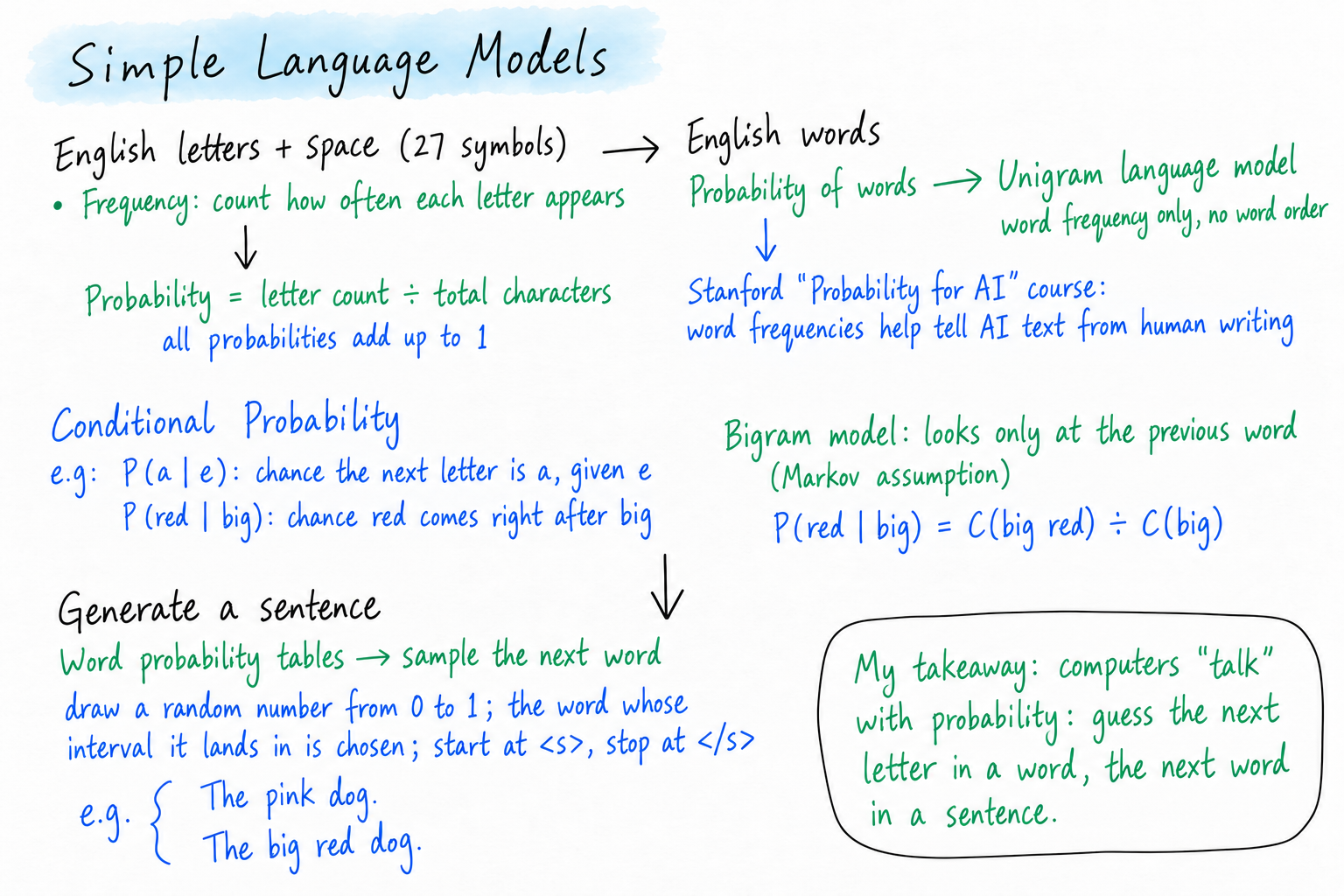 The Basis of Language Models: Probability From letter and word frequencies through conditional probability and bigrams: how a simple language model scores a sentence and writes one word at a time.
- 7
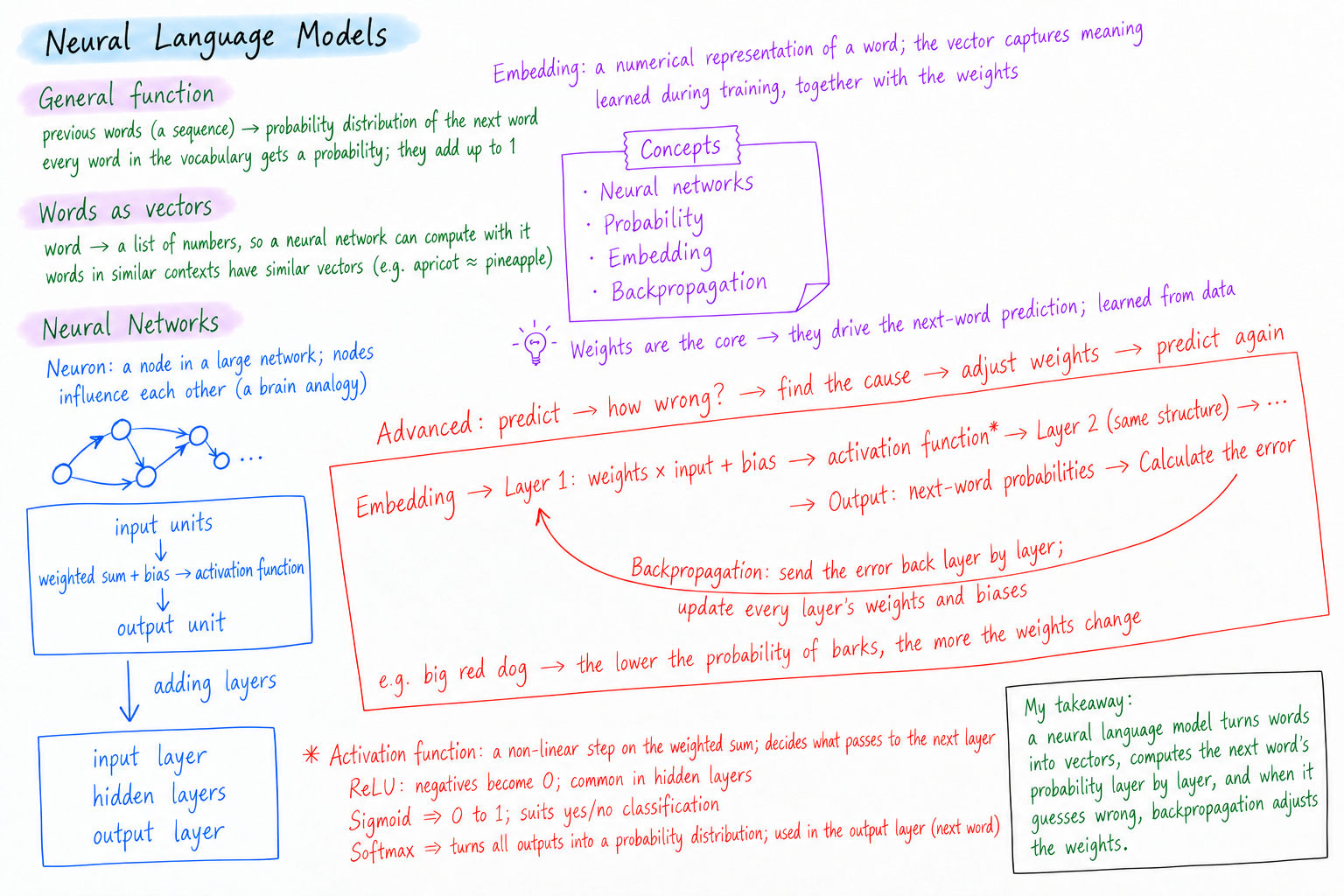 Neural Language Models: From Word Vectors to Backpropagation From what every language model computes through embeddings, neurons, activation functions and backpropagation: how a neural network learns to predict the next word.
- 8
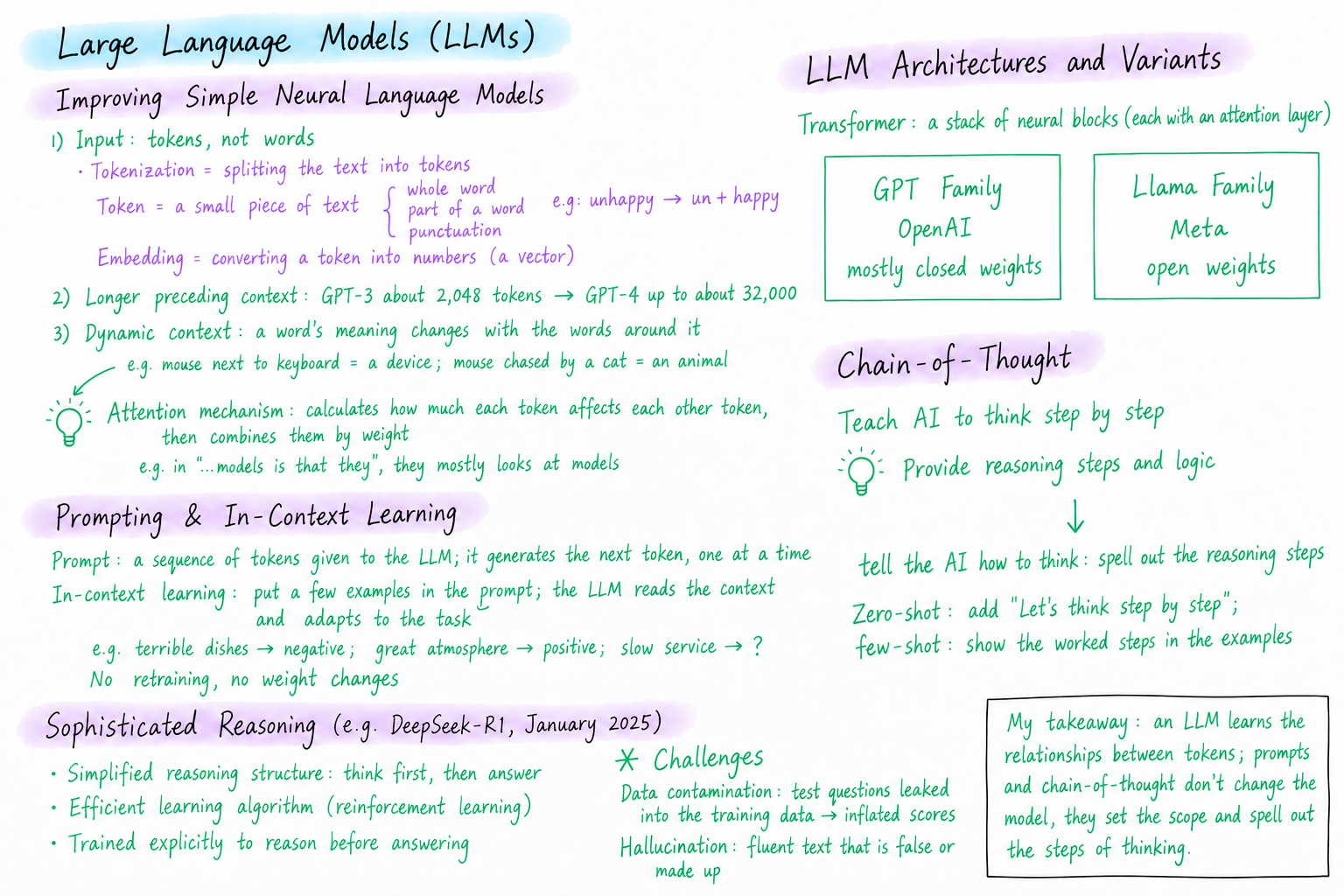 Large Language Models: Tokens, Attention, Prompting and Reasoning From three improvements on neural language models (tokens, longer context and attention) through the Transformer and the GPT and Llama families: prompting, in-context learning, chain-of-thought and models trained to reason.
- 9
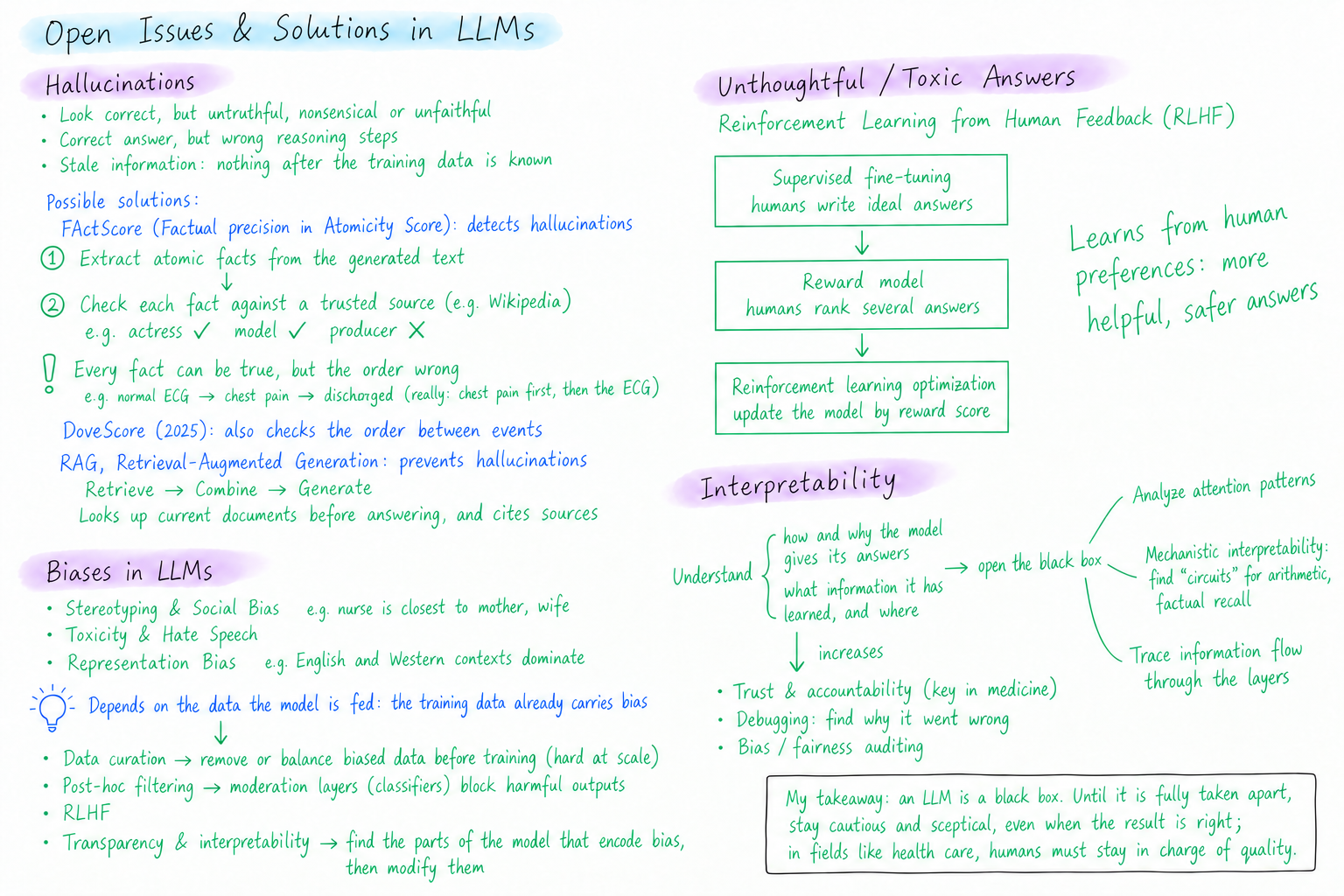 Open Issues in Large Language Models: Hallucination, Bias, Alignment and Interpretability From hallucination and stale information through FActScore, DoveScore and RAG to RLHF, bias mitigation and interpretability: where the problems of large language models come from and how they can be reduced.
UBC · Extraction and Analysis of Clinical Documents3 stops so far
- 1 start with the course
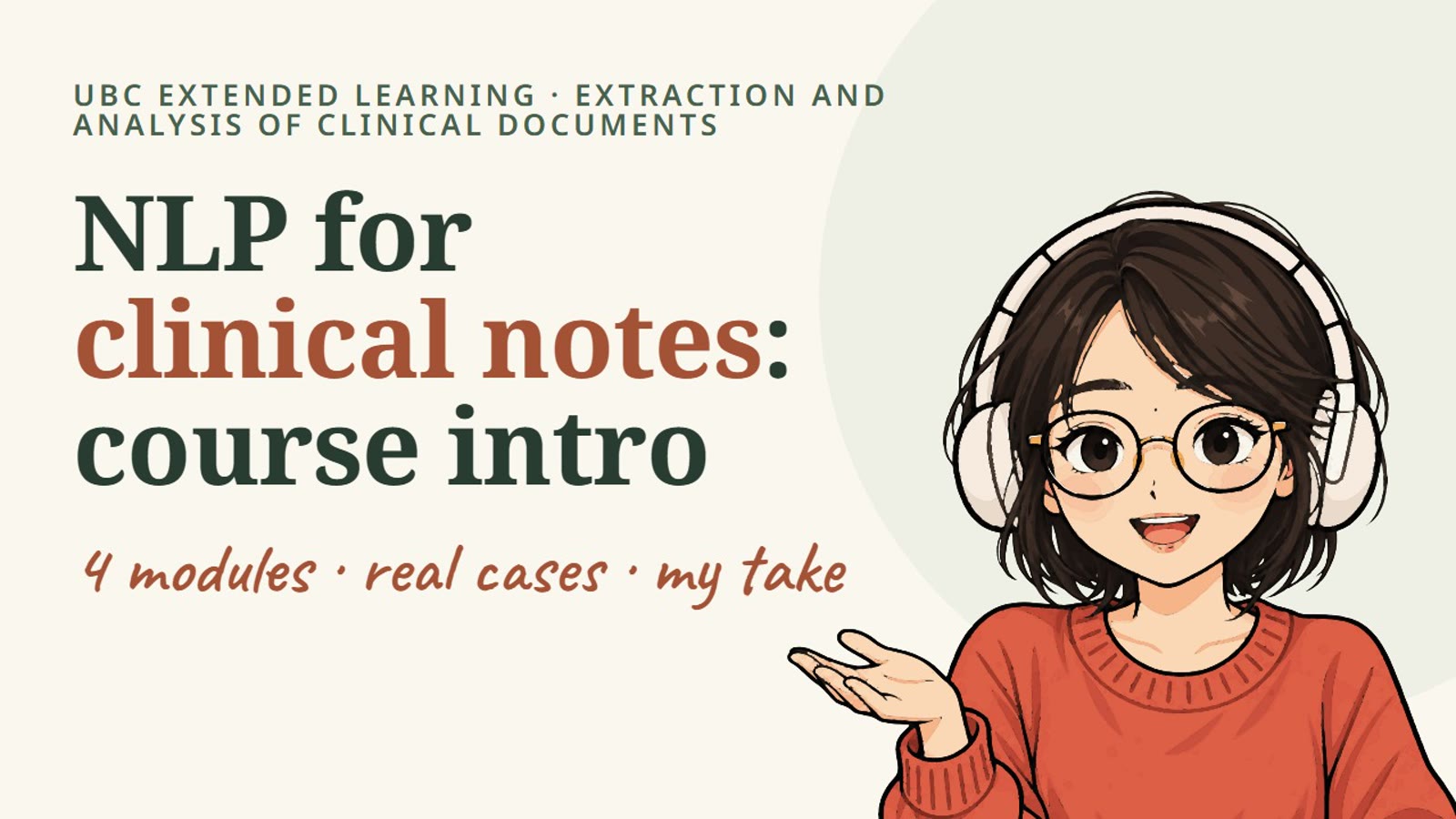 UBC's Extraction and Analysis of Clinical Documents: Course Intro UBC's second NLP course at a glance: where it fits in the micro-certificate, how it runs, who presents it, its four modules, and my first impression after module one.
- 2
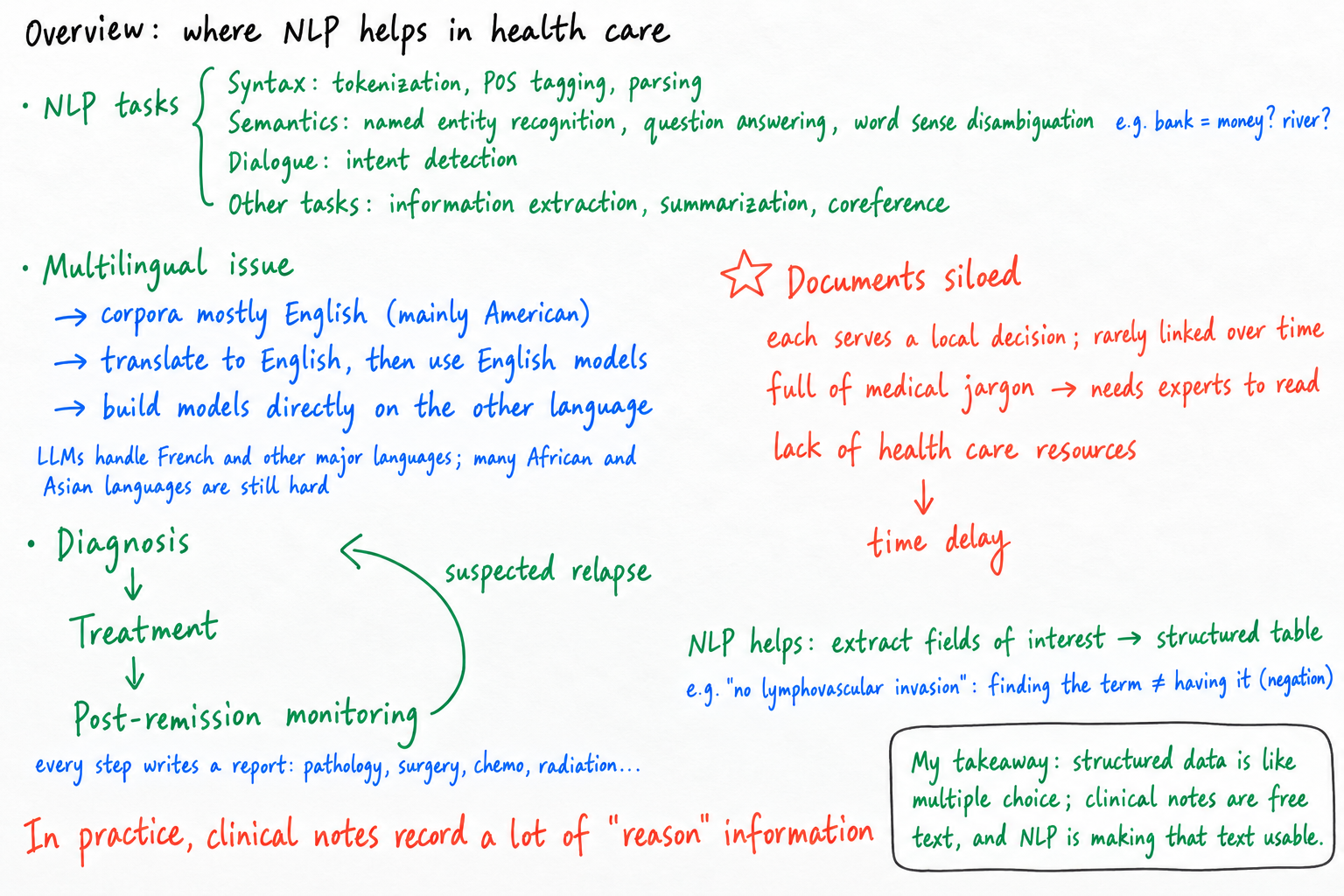 Where Can NLP Help in Health Care? Clinical Documents, Patient Voices and the Cancer Journey Why NLP matters in health care: clinical documents versus patient-written text, four groups of NLP tasks, other languages and speech, and how a cancer journey leaves siloed reports whose fields, and negations, a computer must read.
- 3
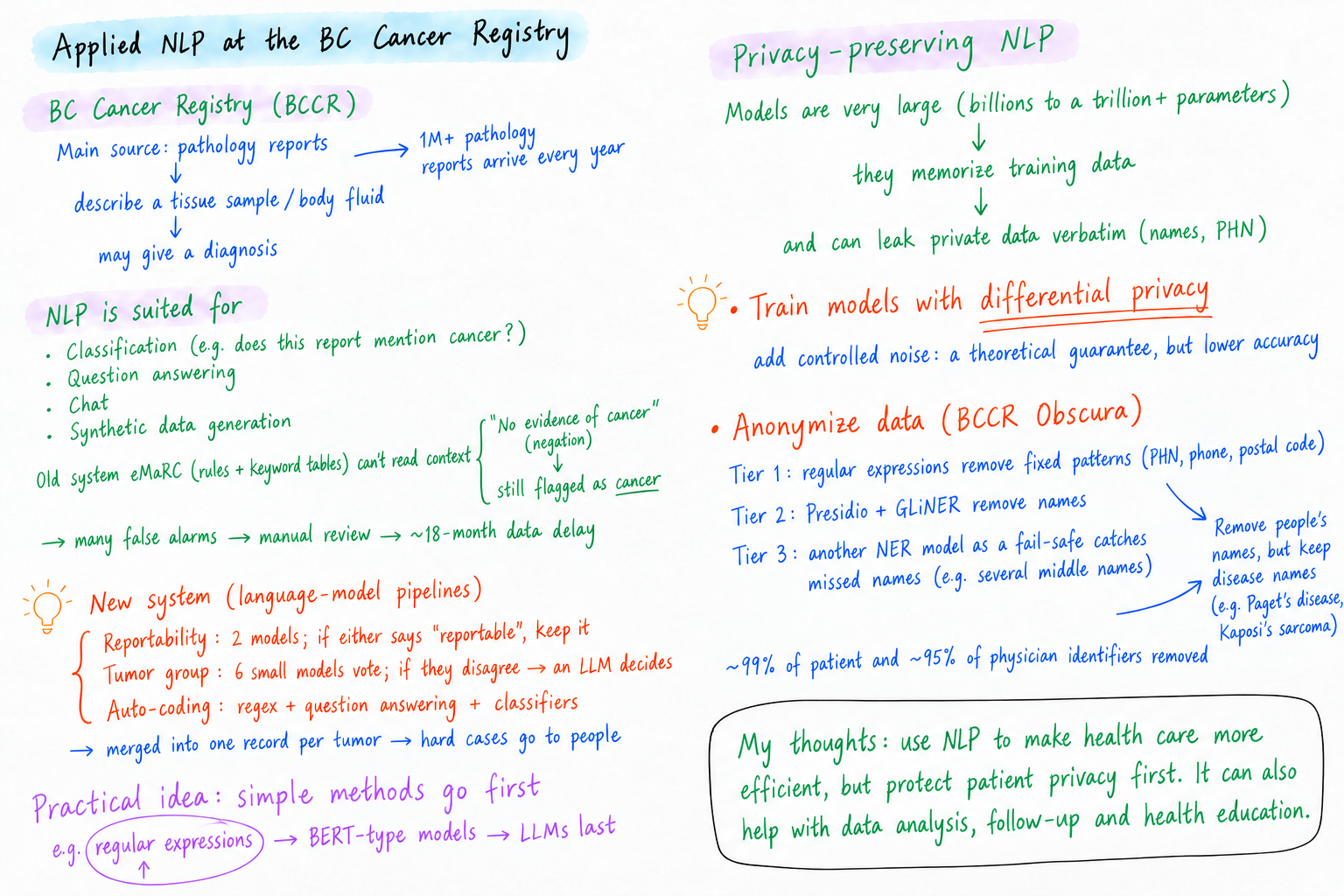 NLP at the BC Cancer Registry: From Pathology Reports to Privacy How the BC Cancer Registry reads a million pathology reports a year: why keyword rules fail on "no evidence of cancer", a pipeline that uses regex, small models and an LLM each where it fits, and how models can leak patient data unless it is anonymized first.
- 4 Alcohol in the Emergency Department
· coming next ·Next stopMy notes on Uncovering the Burden of Alcohol in the Emergency Department with NLP
Stanford · Probability for Artificial Intelligence3 stops so far
- 1 start with the course
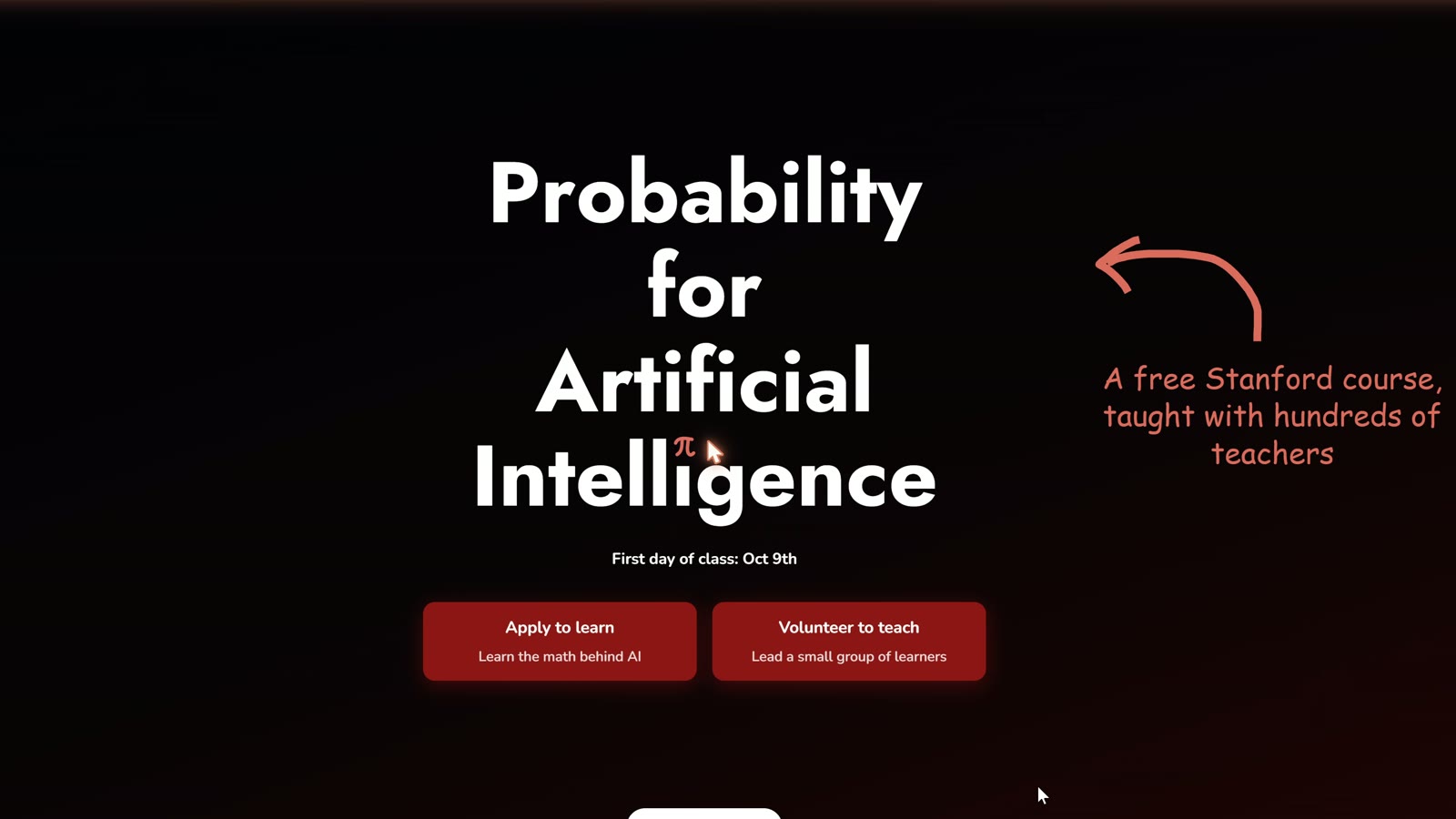 Stanford's Probability for AI: an Introduction to the Course A free Stanford course on the probability behind modern AI: who teaches it, the one-teacher-per-ten-students model, the weekly section, and the six-week plan.
- 2
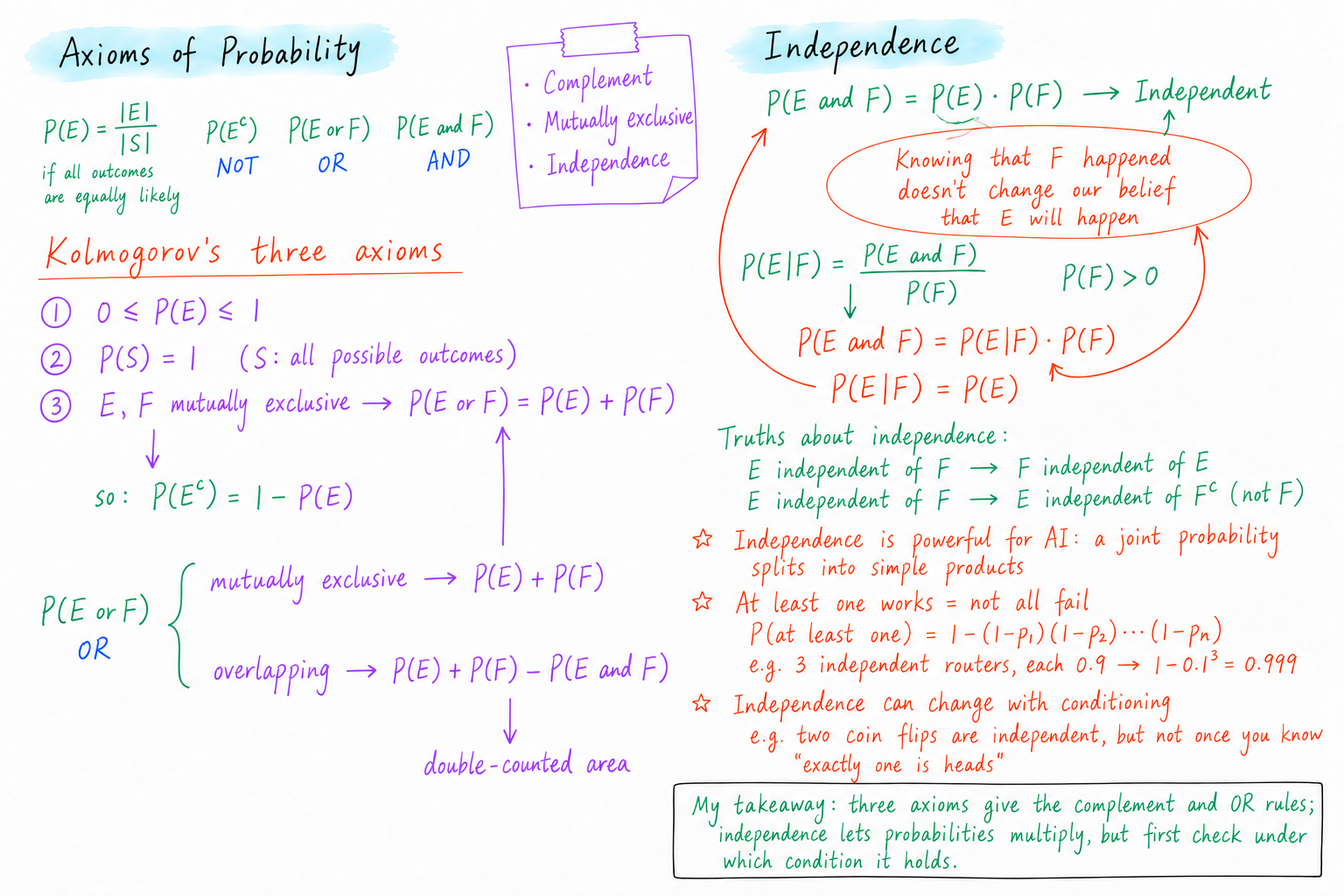 Axioms of Probability: Complement, OR and Independence From probability symbols and how to read them through Kolmogorov's three axioms, the complement and OR rules and conditional probability to independence: when two probabilities can simply be multiplied, and when conditioning changes that.
- 3
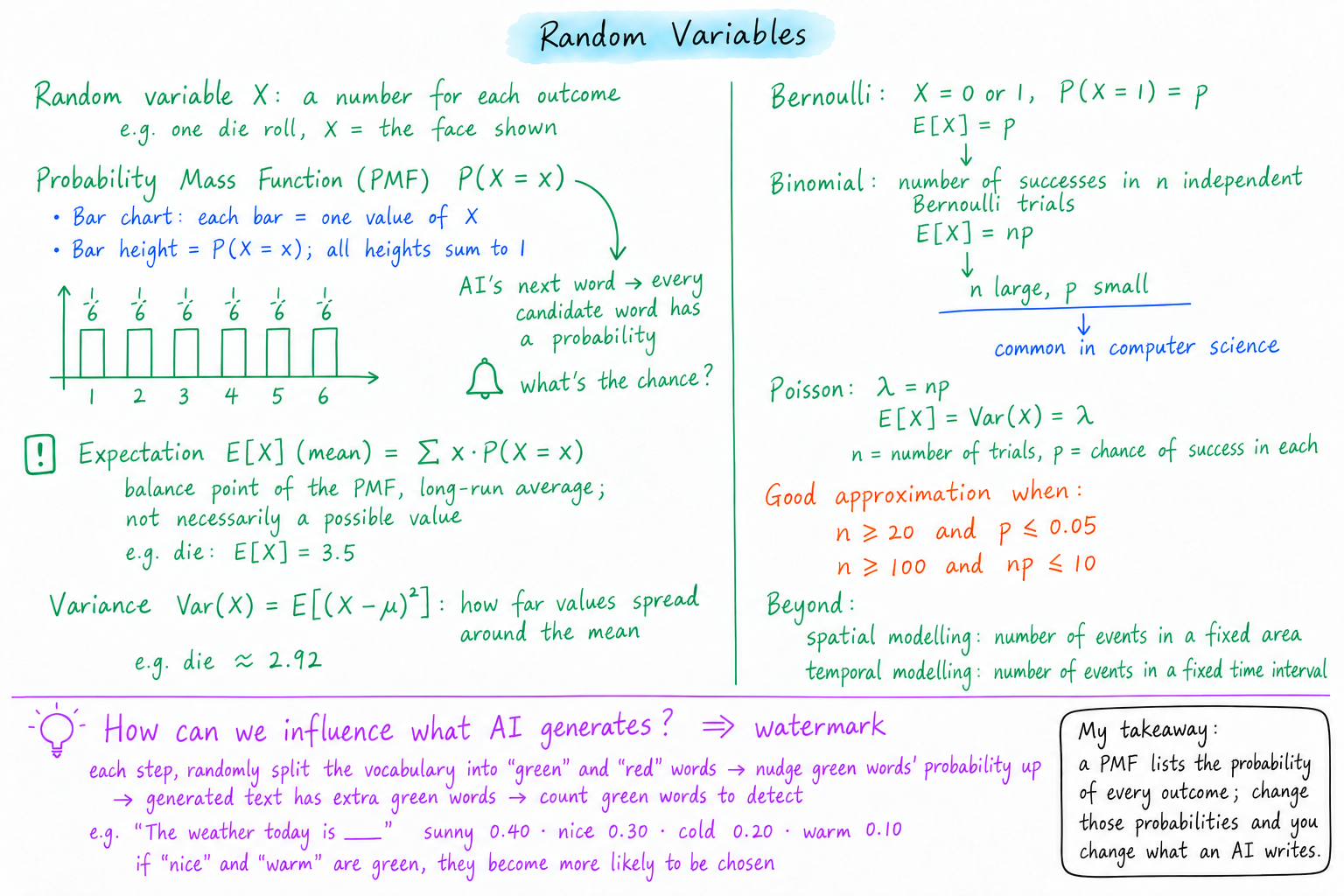 Random Variables and Three Common Distributions: From the PMF to AI Watermarks From random variables and the probability mass function through expectation and variance to the Bernoulli, binomial and Poisson distributions, and how changing word probabilities lets an AI text carry a watermark.
- 4 Probabilistic Models
· coming next ·Next stopMy notes from week two, lesson 2 of Probability for AI
my notebook
NLP at the BC Cancer Registry: From Pathology Reports to PrivacyHow the BC Cancer Registry reads a million pathology reports a year: why keyword rules fail on "no evidence of cancer", a pipeline that uses regex, small models and an LLM each where it fits, and how models can leak patient data unless it is anonymized first.Where Can NLP Help in Health Care? Clinical Documents, Patient Voices and the Cancer JourneyWhy NLP matters in health care: clinical documents versus patient-written text, four groups of NLP tasks, other languages and speech, and how a cancer journey leaves siloed reports whose fields, and negations, a computer must read.Random Variables and Three Common Distributions: From the PMF to AI WatermarksFrom random variables and the probability mass function through expectation and variance to the Bernoulli, binomial and Poisson distributions, and how changing word probabilities lets an AI text carry a watermark.UBC's Extraction and Analysis of Clinical Documents: Course IntroUBC's second NLP course at a glance: where it fits in the micro-certificate, how it runs, who presents it, its four modules, and my first impression after module one.Axioms of Probability: Complement, OR and IndependenceFrom probability symbols and how to read them through Kolmogorov's three axioms, the complement and OR rules and conditional probability to independence: when two probabilities can simply be multiplied, and when conditioning changes that.UBC's Overview of NLP and Large Language Models: the Whole Course at a GlanceThe whole UBC course in one place: the micro-certificate it belongs to (and the StrongerBC grant), how it runs, the instructor, the course site, and how four modules became eight notes.Stanford's Probability for AI: an Introduction to the CourseA free Stanford course on the probability behind modern AI: who teaches it, the one-teacher-per-ten-students model, the weekly section, and the six-week plan.Open Issues in Large Language Models: Hallucination, Bias, Alignment and InterpretabilityFrom hallucination and stale information through FActScore, DoveScore and RAG to RLHF, bias mitigation and interpretability: where the problems of large language models come from and how they can be reduced.Large Language Models: Tokens, Attention, Prompting and ReasoningFrom three improvements on neural language models (tokens, longer context and attention) through the Transformer and the GPT and Llama families: prompting, in-context learning, chain-of-thought and models trained to reason.Neural Language Models: From Word Vectors to BackpropagationFrom what every language model computes through embeddings, neurons, activation functions and backpropagation: how a neural network learns to predict the next word.The Basis of Language Models: ProbabilityFrom letter and word frequencies through conditional probability and bigrams: how a simple language model scores a sentence and writes one word at a time.From Word Meaning to Knowledge Graphs: Lexemes, WordNet, FrameNet, and Knowledge GraphsFrom lexemes and word relations through WordNet and FrameNet: how computers build up to knowledge graphs, and what UMLS and MeSH do in medicine.Advanced Text Processing: Tokens, Sentences, and LabelsFrom tokens and sentence boundaries to POS tagging and named entity recognition: how text is split and labeled.Basic Text Processing: From Word Structure to Pattern MatchingConnect word structure, normalization and regular expressions to understand how text becomes material for analysis.NLP: from language to research applicationsWords, context, and vocal cues: an introduction to natural language processing and its connection to interview research. papers I've annotated
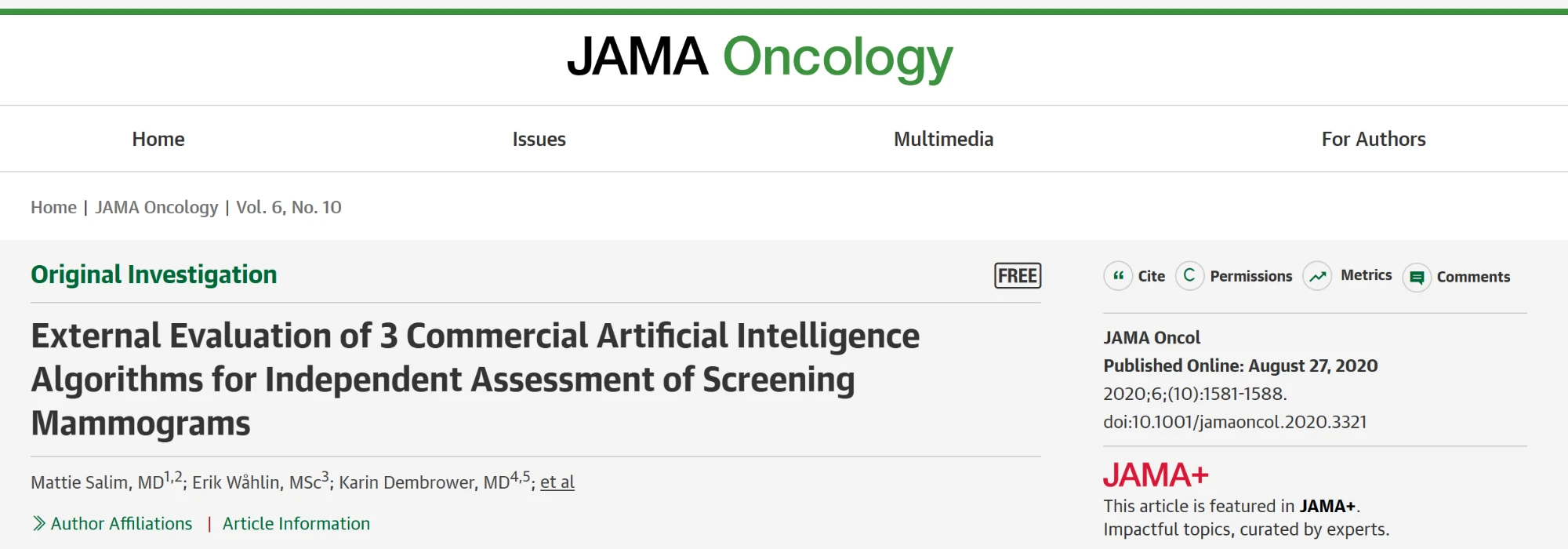 An independent team in Stockholm ran 3 commercial mammography AI algorithms blind on 8805 screening exams (739 cancers, 8066 healthy controls). The best one (AI-1) reached an AUC of 0.956 and, at the first readers' specificity of 96.6%, a sensitivity of 81.9% versus 77.4% for first-reader radiologists; pairing AI-1 with the first reader found the most cancers (88.6% sensitivity) but at a lower specificity of 93.0%.methods first, then what it means for practice →Delphi-2M adapts the GPT architecture to health records: trained on 402,799 UK Biobank participants, it reads a person's diagnosis history, predicts the rates and timing of 1,256 diseases plus death, and can simulate future health trajectories. It reached an average AUC of 0.76 internally and 0.67 on 1.93 million Danish registry records without retraining.methods first, then what it means for practice →
more papers coming: methods first.
Tools I use
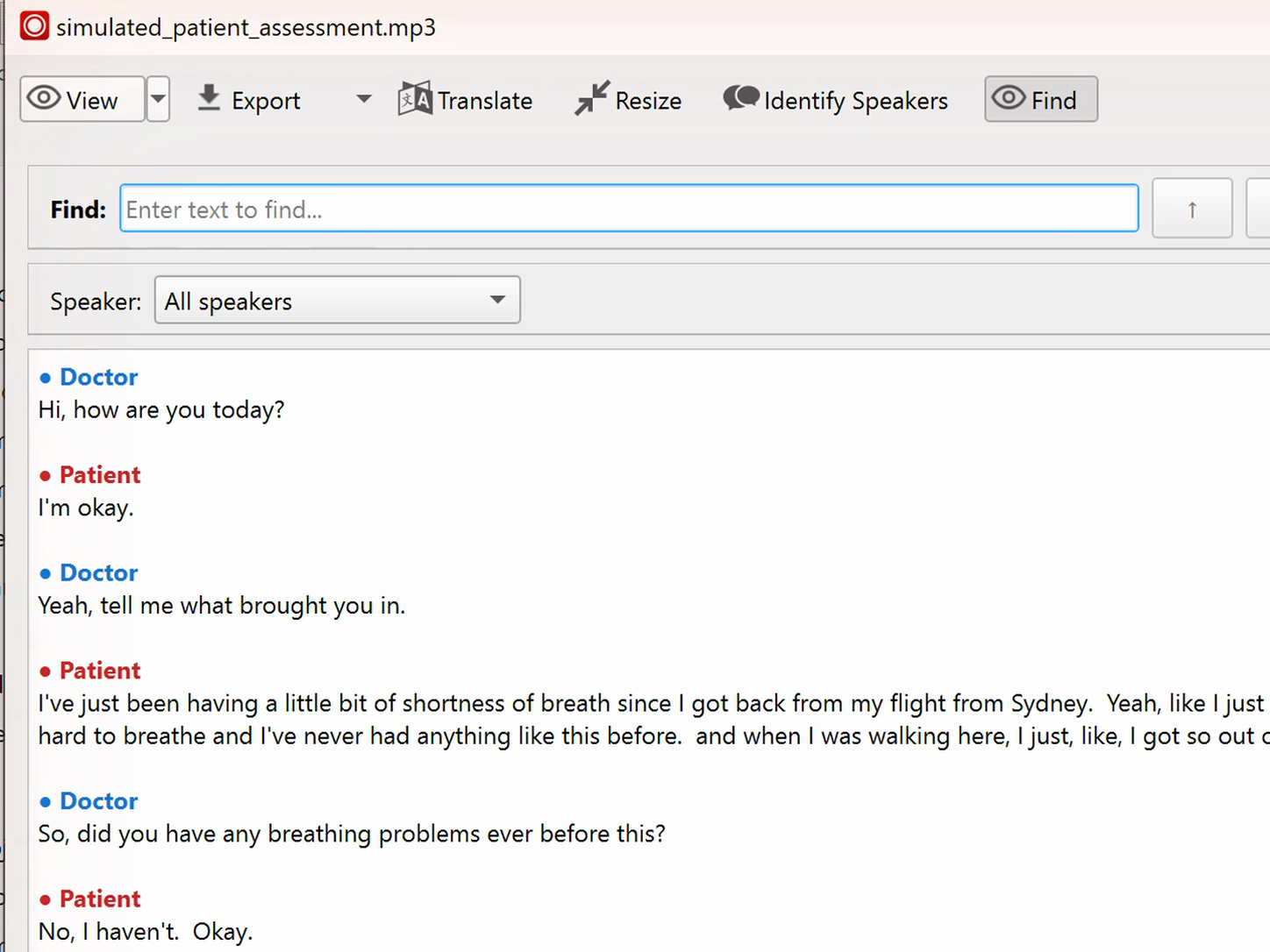
Software I actually use while learning, tried on real course work.
Watch the notes
NLP at a cancer registry: pathology reports and privacyNLP010 · 6:36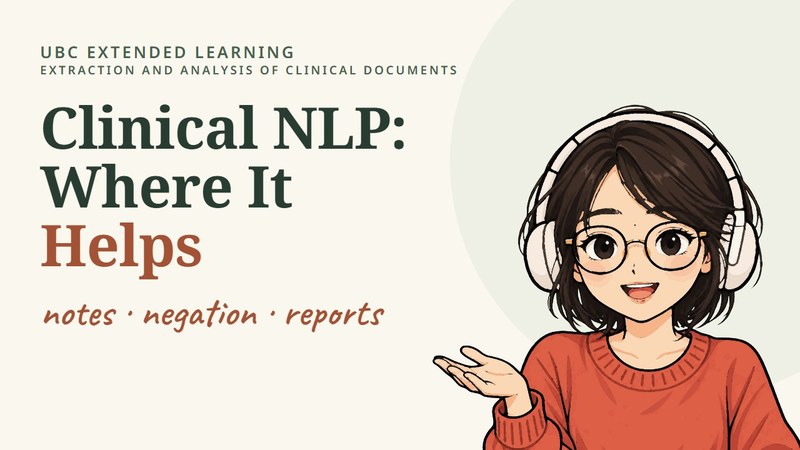 Where can NLP help in health care? Clinical notes explainedNLP009 · 7:11
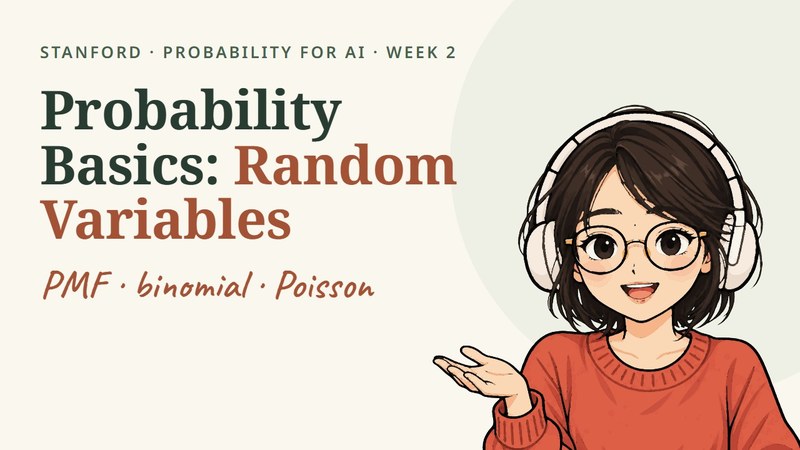 Random variables: PMF, binomial, Poisson and AI watermarksPAI002 · 6:08
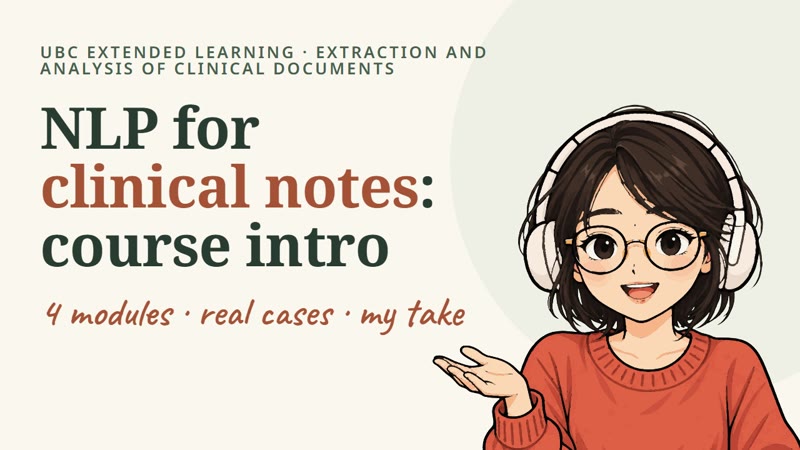 NLP for clinical notes: UBC course introUBC10 · 3:53
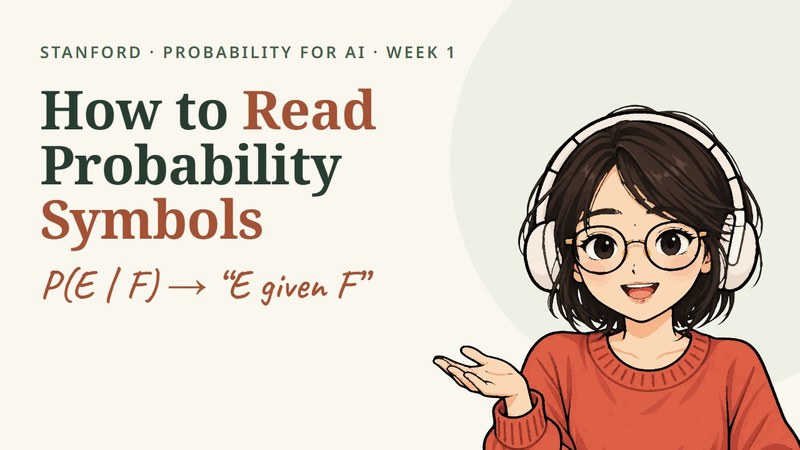 How to read probability symbols out loudPAI001 · 6:11
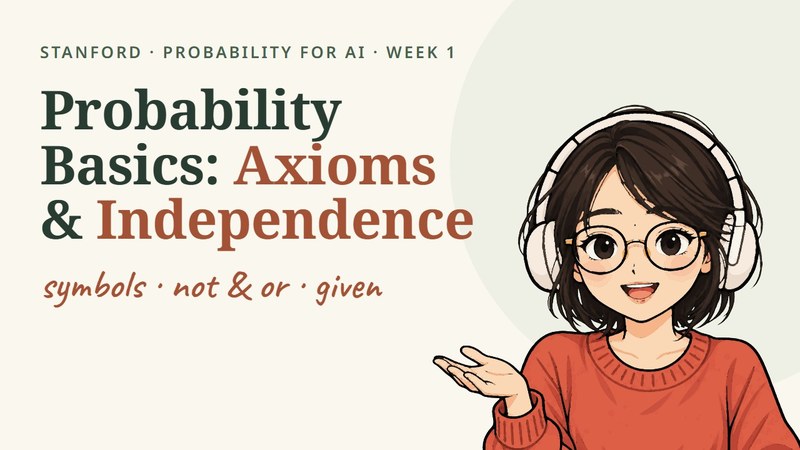 Axioms of probability: complement, OR and independencePAI001 · 5:11
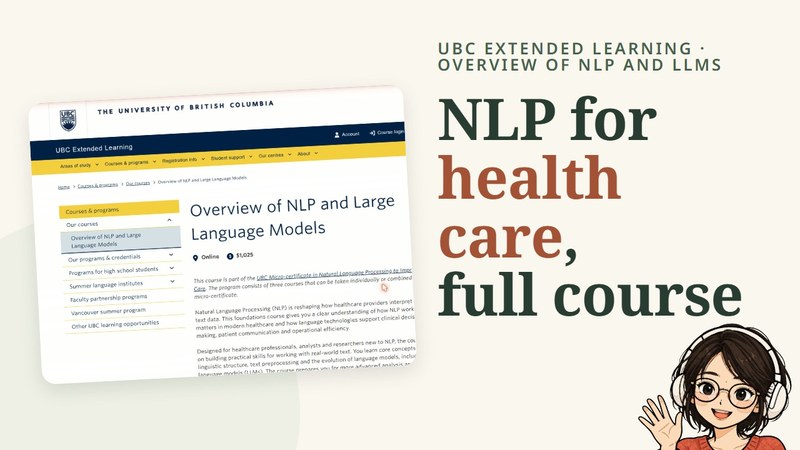 Learning NLP at UBC: a health researcher's course reviewUBC00 · 4:11
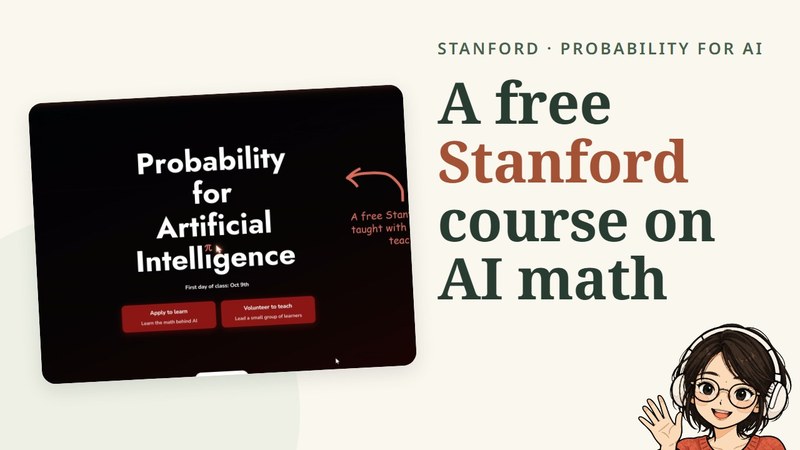 Learning the math behind AI: Stanford's free PAI coursePAI00 · 4:30
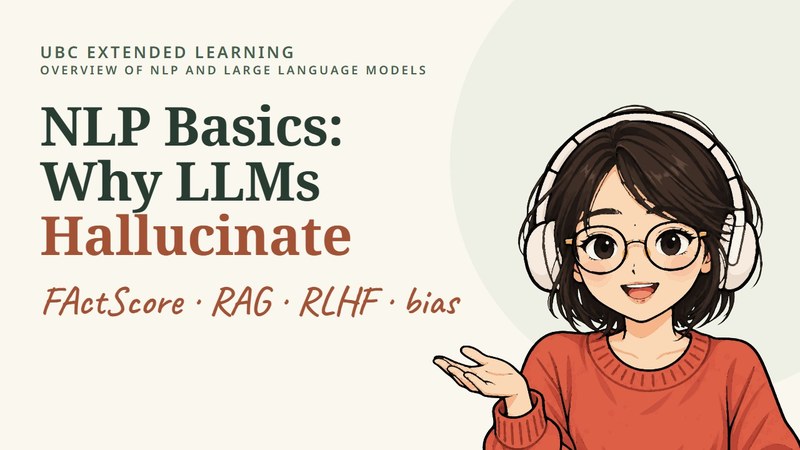 Why LLMs hallucinate: FActScore, RAG, RLHF and biasNLP008 · 6:00
 Large language models: tokens, attention, promptsNLP007 · 5:33
 Buzz review: free offline transcription for patient interviewsTools I Use · 3:59
 Neural language models: from word vectors to backpropagationNLP006 · 4:15
 JAMA paper: can AI read mammograms?Paper to Practice · 3:05
 How language models predict the next wordNLP005 · 3:55
 From word meaning to knowledge graphsNLP004 · 4:29
 Tokens and labelsNLP003 · 3:48
 Basic text processingNLP002 · 3:21
 Nature paper: AI predicts disease riskPaper to Practice · 3:42
 NLP: from language to researchNLP001 · 2:37